Individual TourPrivate journey
Individual Tour
12-Day Individual TourUzbekistan Discovery
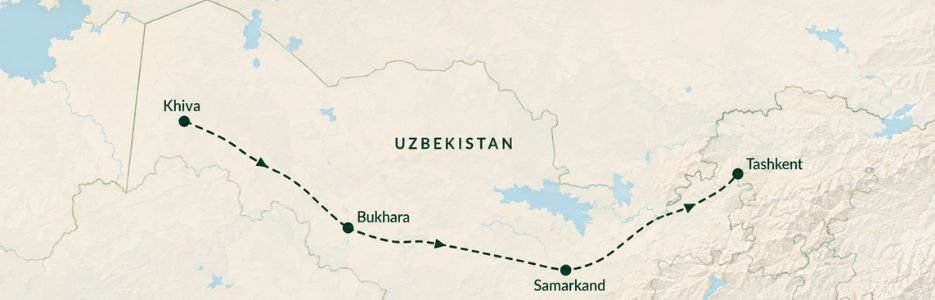
Tashkent, Samarkand, Bukhara and Khiva in one privately arranged journey through Uzbekistan.
One countryUzbekistan
Travel stylePrivate journey with rail travel
Travel periodRecommended April–October
Day 1 – 2 – Tashkent
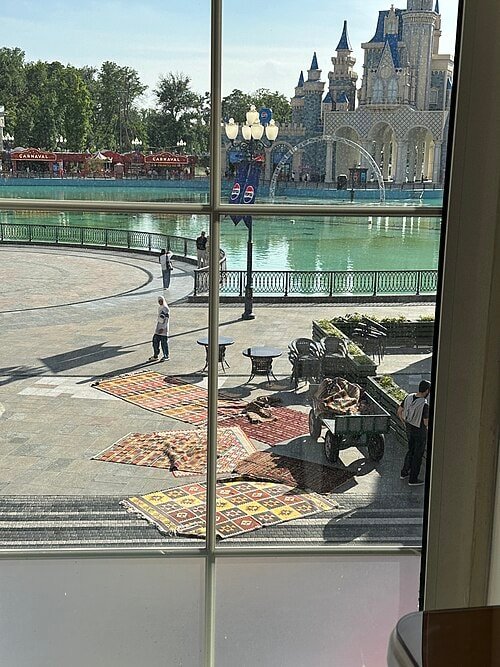
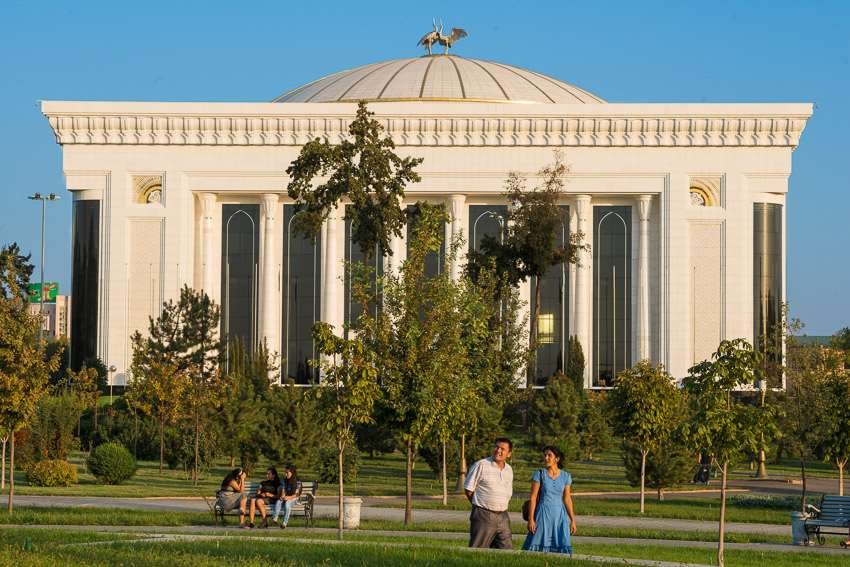
After (early) arrival in Tashkent, you will be transferred to your accommodation where you can check in directly to your room. The ancient city of Tashkent has its origins in the fertile oasis on the Chicik River. Due to the severe earthquake of 1966, there are few historic buildings in present-day Tashkent. The city is a typical Soviet city; wide tree-lined boulevards, squares, fountains and apartment blocks. Tashkent used to be an important stop on the Silk Road between Europe and Asia. Today the city has developed into a modern city of which no less than one third of the area is taken up by beautiful parks and numerous fountains. In the old part of the city, the impressive Khast Iman complex with the Friday mosque, Kafali Shash mausoleum and the Kukeldash medresse immediately stands out. The world-famous Quran of Caliph Uthman, or the Ottoman Quran, is on display here. The Ottoman Quran is the primary source of Islam, which was written in the mid-7th century. Near the old center you will find the busy Chorsu bazaar, an impressive spectacle of people, smells and colors. In the modern center you will find Amir Timur Square, where a large statue of this former great leader stands in the middle of the green park. Within walking distance is the Navoi Opera House, the central park with various monuments in memory of the victims of the Second World War and the 1966 earthquake. Overnight stay in Tashkent.
Day 3 – Tashkent – Samarkand
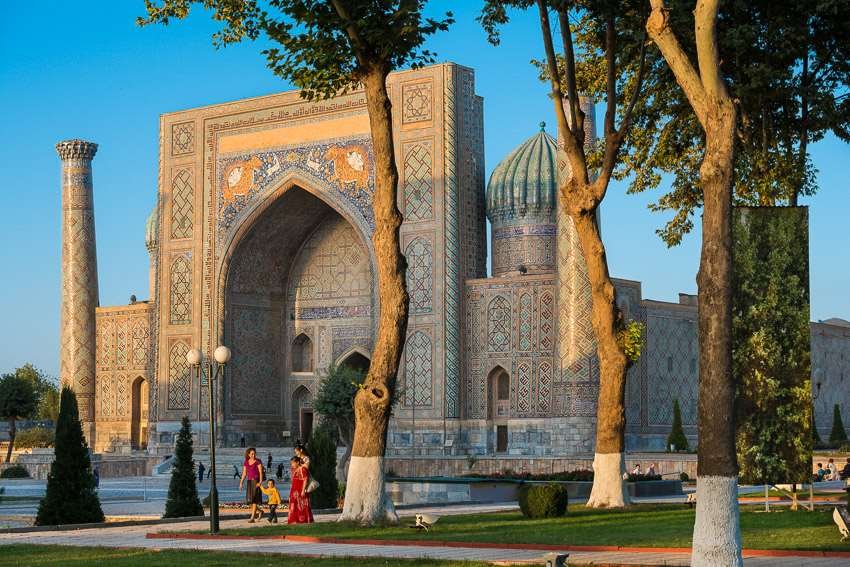
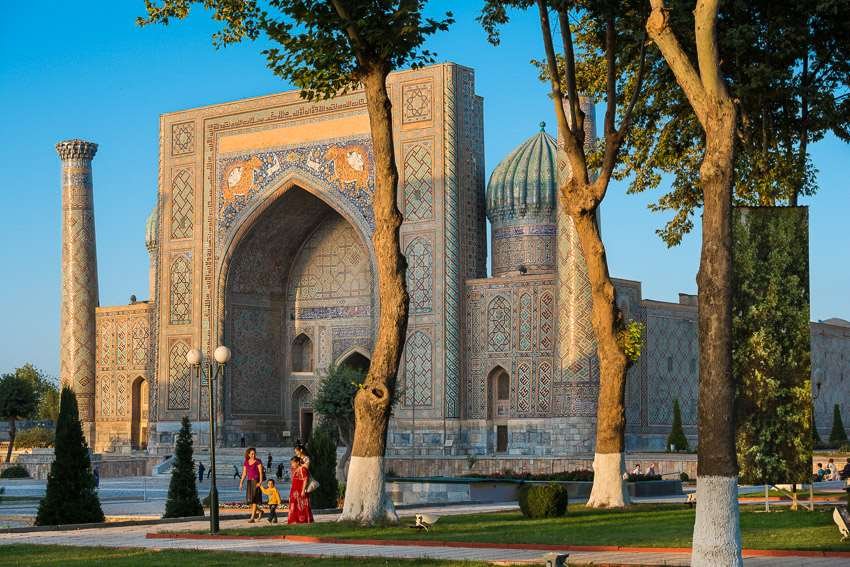
In the morning, transfer to the train station for departure by train to Samarkand. You will arrive towards the end of the morning and our representative will take you to the hotel. The historic city of Samarkand is a crossroads and melting pot of many cultures. This mix is due to the many invasions that befell the more than 2,700 year old city. Alexander the Great, the Arabs and the troops of Genghis Khan, among others, conquered the city. The greatest influence on what we see in the city today comes from Timoerlenk and his grandson Ulugbek. The city experienced its greatest glory during this dynasty in the 14th and 15th centuries. The fairytale Samarkand is often described as the Paradise of the ancient East and the Pearl of the Islamic world. The old town covers an area of more than 4 km² and was surrounded by an 8 meter high wall in the 11th century. After the damage inflicted by the Mongols in the 13th century, Samarkand rose from its ruins in the 14th century more beautiful than before. The optional city tour starts in the center at Registan Square, once described as one of the most beautiful squares in the world. This square was designed in the 14th century and is surrounded on three sides by the Ulugbek, Tilla Kori and Sherdor medresses. The oldest of the three is the Ulugbek medresse, which was built in the period 1417-20 on behalf of Timoer's grandson. Behind the richly decorated facade is a small courtyard surrounded by the cells where the students and their teachers, the mullahs, resided. The ruins of the Bibi Khanym mosque are impressive. Just outside the center is the 15th-century Ulugbek Observatory. For its time, this was a very accurate and trend-setting instrument. The nearby Shakhi-Zinda mausoleum complex is a group of mausoleums built around the tomb of Kussam Ibn Abbas, the cousin of Prophet Muhammad, who is said to have brought Islam to Samarkand. He is said to have been murdered at the end of the 7th century on the spot where his tomb now stands. Overnight in Samarkand.
Day 4 – 5 – Samarkand
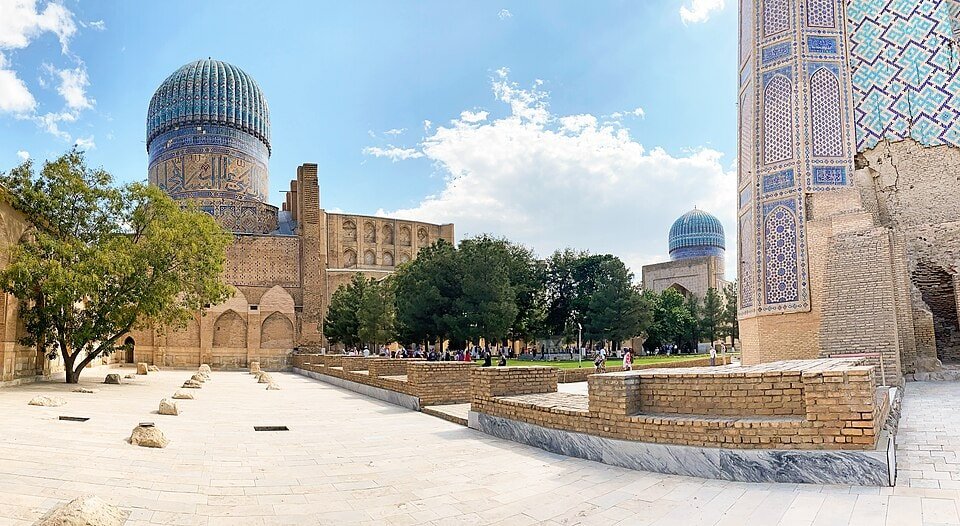
Days at leisure. Overnight stay in Samarkand.
Day 6 – Samarkand – Bukhara
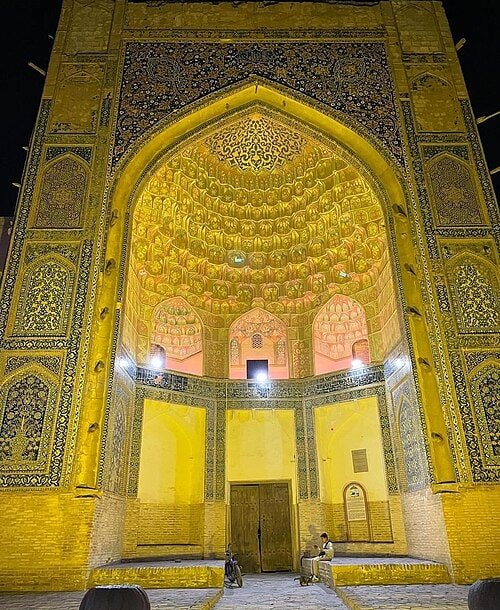
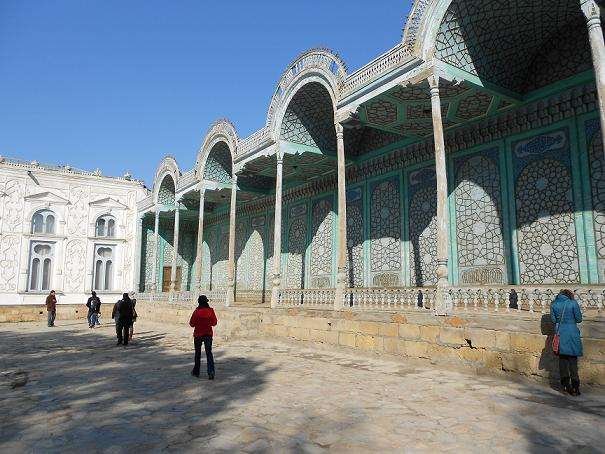
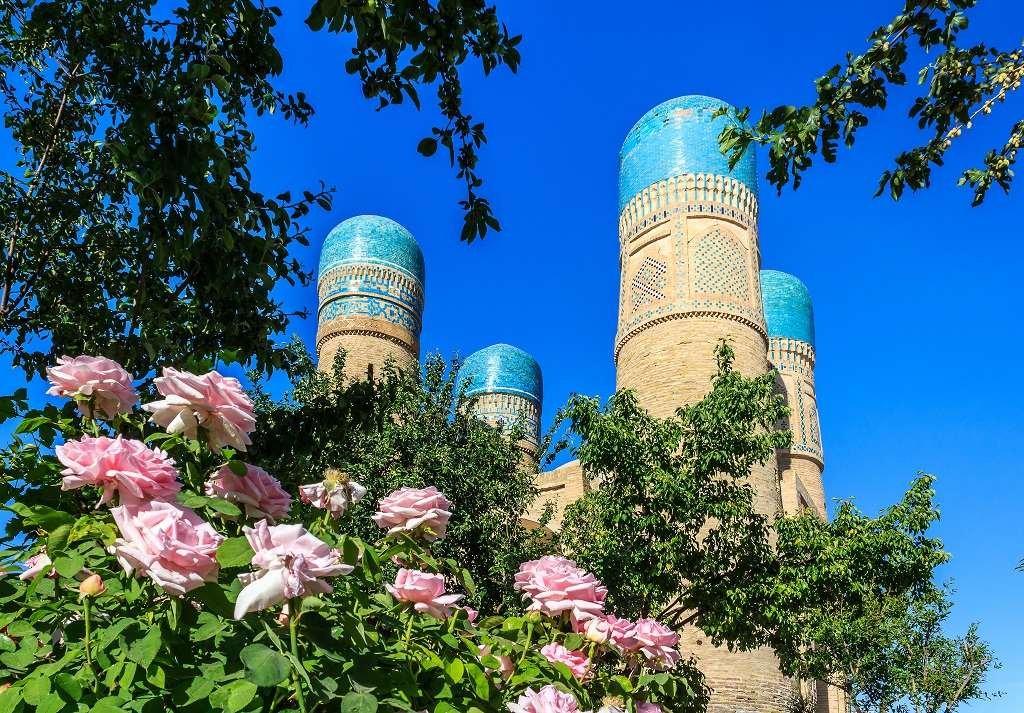
After breakfast you will be picked up and taken to the train station in Samarkand for the train journey to Bukhara. Upon arrival in the afternoon you will be transferred to your hotel. Bukhara is an ancient settlement with a history dating back to before the time of Alexander the Great's conquest of Sogdiana. In 892 Bukhara became the capital of the Samanids and that meant a period of great prosperity. The empire included large parts of Uzbekistan, Tajikistan, Iran and Afghanistan. In the 16th century, after the establishment of the Uzbek Shaibanai dynasty, Bukhara again became the capital of a large Central Asian state. The city grew and the new city walls were built. The Friday Mosque from 1514 stands next to the 48 meter high Kalyan minaret, the symbol of Bukhara. It became one of the largest structures in Central Asia. On the other side of the square, where the minaret is located, the Miri-Arab medresse was built in 1535-1536 as an Islamic school. Overnight in Bukhara.
Day 7 – 8 – Bukhara
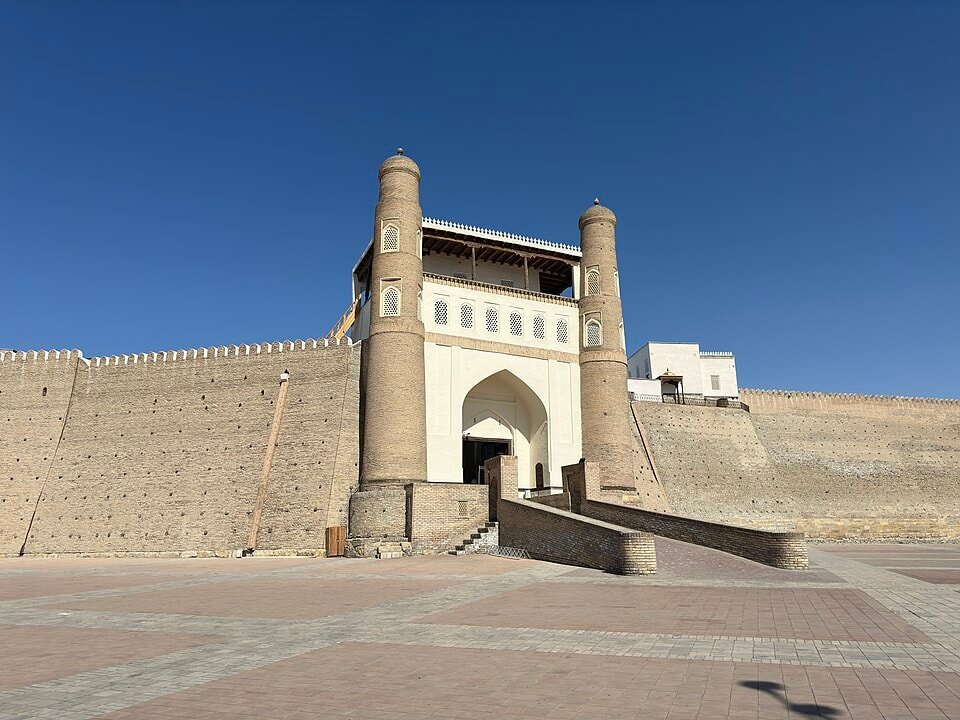
Days at leisure. Overnight in Bukhara.
Day 9 – Bukhara – Khiva
In the morning you will be picked up for the 450 km drive to Khiva. The ride takes you straight through the Kizilkum desert, along the Amu Darya river. You drive past vast fields of cotton grown in the desert thanks to intensive irrigation. During the drive into the desert you will make a stop for lunch at a Chayhana, a local tea house. Please bring your own packed lunch. You will arrive in Khiva in the early evening.
Overnight in Khiva.
Day 10 – Khiva
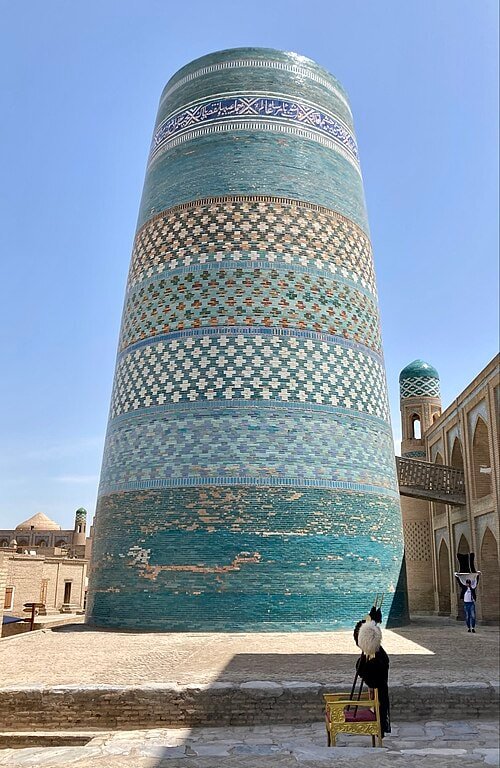
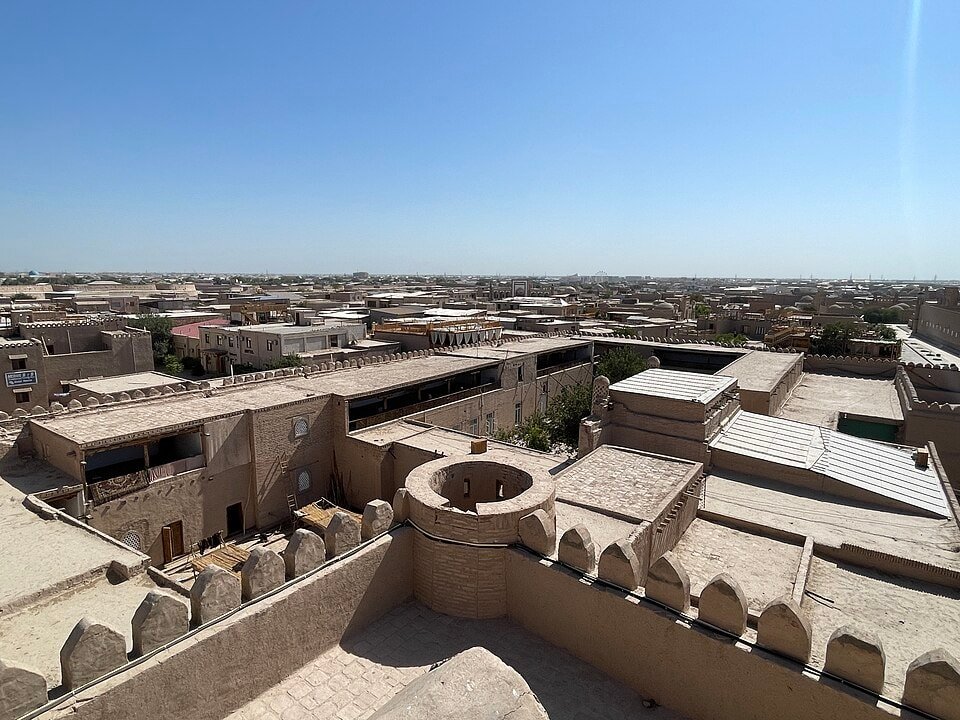
Khiva is one of the largest historical cities along the Silk Road and also the most touristic city in Uzbekistan. The old walled city has remained almost completely intact and when you stand in front of the mighty city walls and the city gate of Khiva, you will feel like you are in a completely different world. Around the wide blue unfinished Kalta Minor minaret it seems as if life from the past has stood still. Khiva consists of an inner and outer city, each with its own wall: the Dichan Kala is the outer city, where the current population lives and the Ichan Kala is the city center, which is a true open-air museum.
Overnight in Khiva.
Day 11 – Khiva – Tashkent
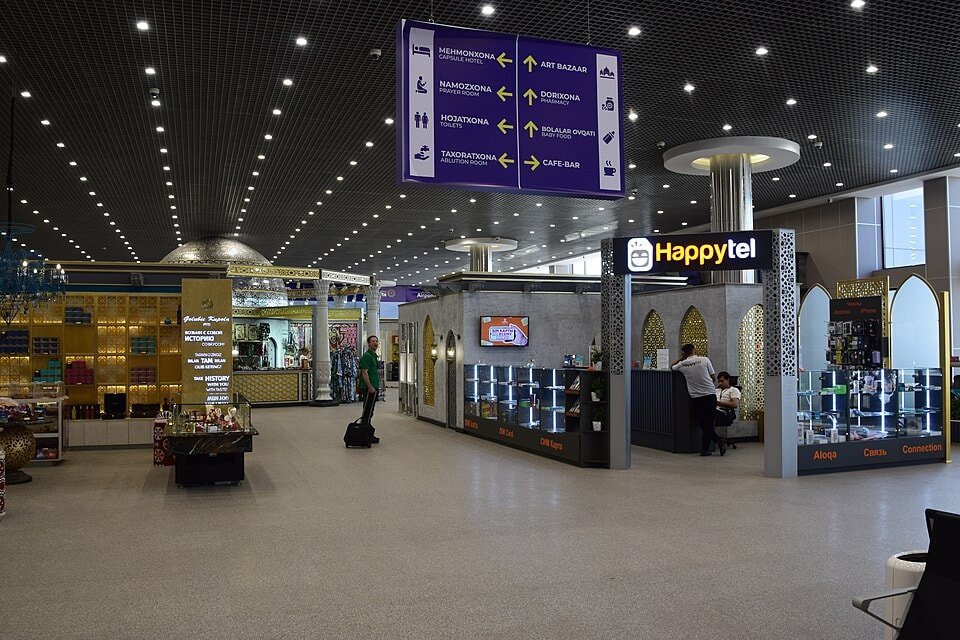
In the evening you will be transferred to Urgench, from where your domestic flight to Tashkent departs.
Day 12 – Tashkent
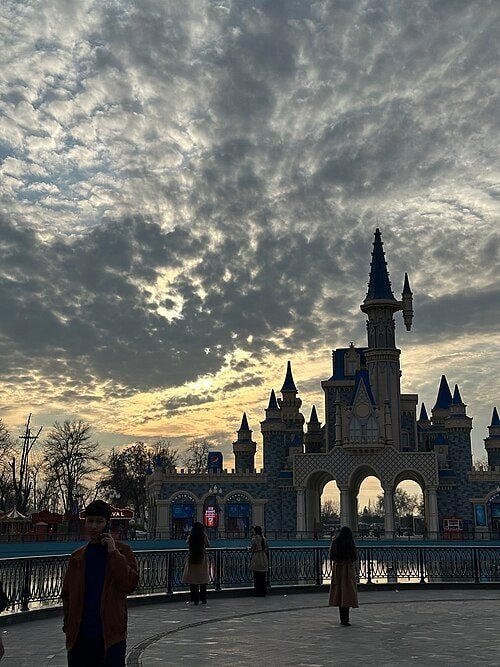
Today you will fly back home.
Included
Part of the program
- Domestic flight Urgench - Tashkent with Uzbekistan Airways
- Transfers from the airport/train stations to the hotel and vice versa
- Overnight stays in comfortable 3-star hotels on a bed/breakfast basis
- Train ticket Tashkent - Samarkand, 2nd class
- Train ticket Samarkand - Bukhara, 2nd class
- Transfer from Bukhara to Khiva (if possible by train, 2nd class)
Not included
- International flight. Calaio Viajes y Turismo is happy to assist you in selecting your flight.
- Optional excursions accompanied by a local English-speaking guide €70 per person per day.
- Reservation fees
- Calamity fund € 2.50 per booking of max. 9 people
- SGR consumer contribution €5 per person (as of February 1, 2021)
- Travel and cancellation insurance; see Travel Insurance under Extras.
- Additional costs on site: tips, optional excursions, etc.
Conditions and notes
- This trip can be tailor-made. Please inquire with one of our employees.
- Traveling by train in Uzbekistan is much more convenient than by car. You can choose from several trains to reach the most popular tourist destinations. The Afrosiyob and Sharq conduct regular trips to Samarkand, Bukhara, Tashkent and Khiva. There are no daily trains between Bukhara and Khiva, so depending on your travel program and travel date we will arrange a transfer or train journey.
Hotel Information
Accommodation along the route
Tashkent · Hotel Uzbekistan · 3-star hotel
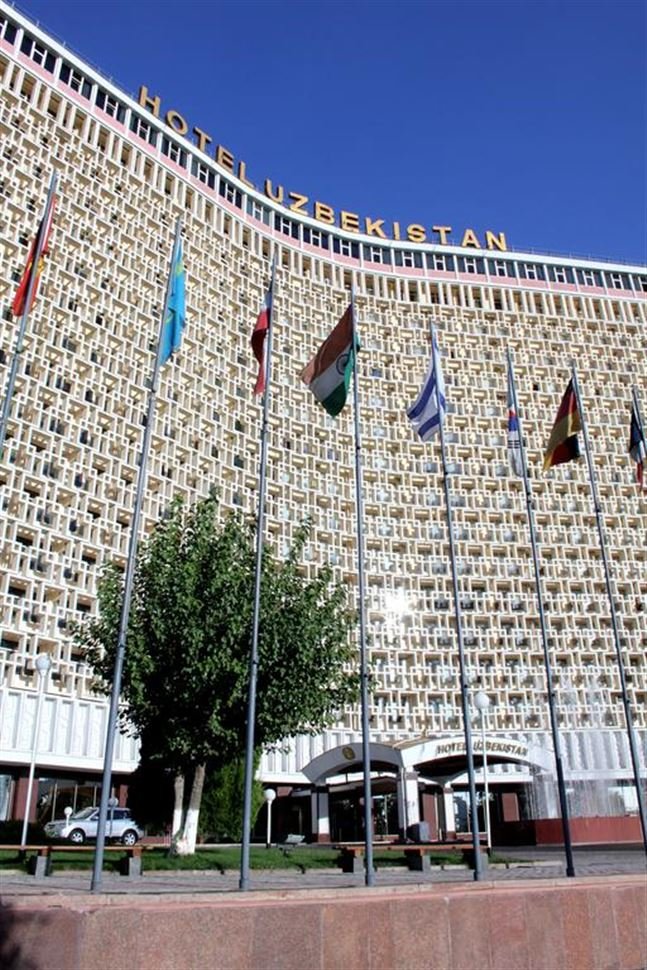
A very central hotel, 100 metres from Amir Temur Square.
Facilities: Restaurant serving European and local specialities, bar, snack bar, fitness room with sauna, beauty salon and massage salon.
Rooms: Classically furnished rooms with air conditioning, flat-screen television and a fully equipped bathroom; suites also include a minibar.
Samarkand · Hotel Dilshoda · 3-star hotel
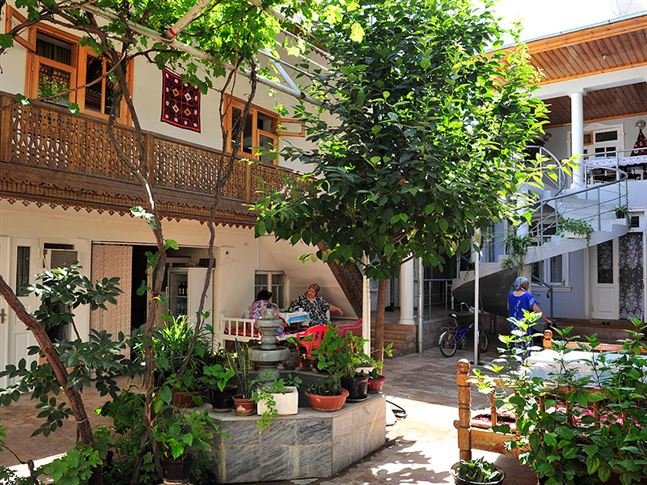
Centrally located in the old city opposite the Gur-e Amir Mausoleum.
Facilities: A 24-hour reception, welcoming courtyard and an extensive breakfast served each morning.
Rooms: Simply furnished rooms with air conditioning, Wi-Fi and satellite television, plus a fully equipped bathroom with bath or shower.
Bukhara · Hotel Bibi Khanum · 3-star hotel
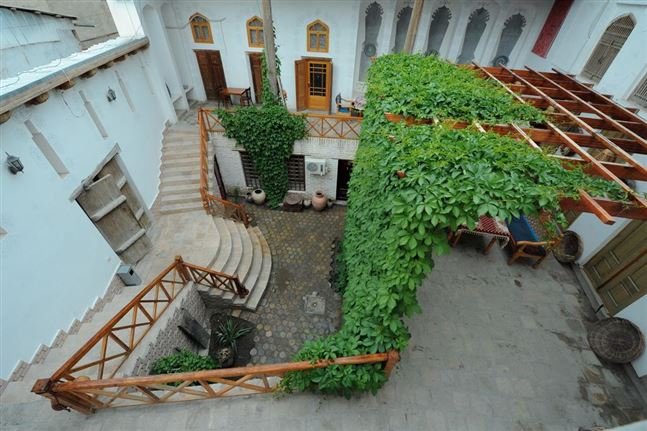
Located in central Bukhara near the mosque and a two-minute walk from the Lyab-i Hauz complex.
Facilities: Breakfast room, free Wi-Fi and bicycle rental.
Rooms: Traditionally furnished rooms with air conditioning and flat-screen television; bathrooms include a shower and hairdryer.
Khiva · Hotel Asia Khiva · 3-star hotel
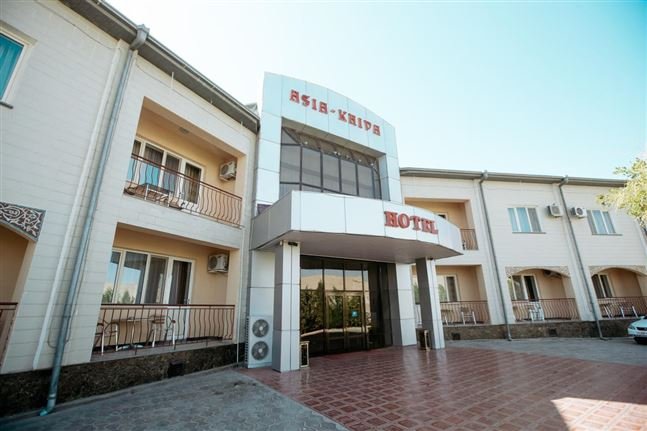
Located close to Khiva’s old centre and the Ichan-Qala gate.
Facilities: Restaurant serving local and international dishes, bar, spa and wellness centre, fitness facilities, swimming pool and sauna.
Rooms: Modern rooms with satellite television, air conditioning and a fully equipped bathroom with bath or shower.
Country Information
Practical country information
Uzbekistan
General
Uzbekistan has captured the imagination of travelers for centuries. However, many travelers never go there, even though Uzbekistan has so much beauty to offer, such as the richly decorated mosques, Quranic schools, and caravanserais. Once you have seen the Registan Square in Samarkand, it will be etched in your memory and never forgotten. Visit the lively markets of Khiva, Bukhara, or Samarkand, where you will meet the friendly people, Uzbek spices and flavors, and the rich colors of the country. Experience the ancient Silk Road! But also get to know the capital, Tashkent, with its Soviet architecture and impressive metro stations.
Location
Uzbekistan is located in Central Asia, bordered by Kazakhstan to the north, Turkmenistan to the south, and Tajikistan to the east. The Fergana Valley of Uzbekistan borders Kyrgyzstan. Uzbekistan consists mainly of desert and semi-desert. The vast lowlands in the west consist of the Kyzylkum Desert (red sand) and the Khoresm oasis on the lower course of the Amu Darya river. In the far west lie the Aral Sea and the Ustyrt Plateau. The Amu Darya and Syr Darya are the two largest rivers of Uzbekistan and originate in the mountain ranges to the east of Uzbekistan. In the east, the foothills of the Tien Shan mountains can be found near the Fergana Valley.
Climate
Uzbekistan has a continental desert climate. Temperatures range from around 0 to 10 degrees in the winter months and from around 25 to 35 degrees in the summer months. The best time to travel is in April, May, and early June, and in the autumn, September and October.
Religion
In Uzbekistan, approximately 90% of the population is Muslim, the majority of whom are Sunnis. The remaining 10% of Uzbeks are Russian Orthodox. Religious freedom only increased after independence. Over time, madrasas and mosques were renovated and built everywhere. Minorities can attend their own church or synagogue. Islamic fundamentalist groups are officially banned in Uzbekistan. The Uzbek population is generally not strict with their religion. For instance, you hear few to no calls to prayer, and the Uzbek population drinks alcohol freely. Wearing a headscarf is not mandatory for women.
Food and drink
The Uzbeks generally make a few exceptions to Islamic rules, primarily regarding alcohol, which flows freely as in other former Soviet republics. Sometimes a glass of vodka is raised as early as lunch. Beer is also readily available. Furthermore, Uzbekistan has an excellent climate for grape cultivation, so local white and red wines are also produced.
In the hotels, you can have breakfast in the morning with Uzbek bread, tea or coffee, various spreads, and sometimes an egg, and – usually – a glass of kefir (plant-based, but it resembles yogurt).
Lunch is hot, as is dinner. The menus are generally the same for both lunch and dinner: very hearty, nutritious soup (Laghman or Borscht) with bread, a main course with meat and vegetables, and always a salad of lettuce, cucumber, and tomato.
Tap water
It is not recommended to drink tap water. If you are unable to buy bottled water, boil the water for 5 minutes. After the water has cooled down, you can safely use it for drinking and for things like brushing your teeth, cleaning contact lenses, and washing vegetables and/or fruit.
Electricity
In Uzbekistan, the same types of plugs are used as at home (220 volts).
Time difference
In Uzbekistan, it is 3 hours ahead of us. Uzbekistan does not observe daylight saving time, so during our summer time, it is 3 hours ahead in Uzbekistan.
Language
Uzbek is the official national language, a language belonging to the Turkic language family. Originally, the Uzbek language used the Arabic script, the Latin alphabet from 1929 to 1940, and subsequently the Cyrillic script. In 1993, a law was passed regulating the transition to the Latin script. In official Uzbek texts, common Russian terms were replaced by newly created Uzbek words. In everyday spoken language, many people use Uzbek mixed with Russian. After fifteen years of independence, knowledge of Russian has declined; a new generation has grown up with the Uzbek language as well as English. Only the older generation still speaks Russian, and of course, the few Russians who remained.
Luggage and clothing
We advise you to bring some extra toilet paper. Toilets and toilet paper are always available in the hotels. However, during travel, we may occasionally pass a rest stop where there is no toilet paper. For hygienic reasons, it is recommended to bring your own wet toilet paper to clean your hands where no water is available. Disinfectant lotion is also recommended.
For visits to the sights, a covered shoulder is sometimes mandatory. Headscarves are not used at religious sites and are therefore not necessary. You may bring your swimwear; if there is a swimming pool, you may use it.
For all our trips, you are allowed to bring one suitcase per person with a maximum weight of 20 kilos in the coach/jeep. This regulation may therefore differ from the rules of the airline operating your flight. Nowadays, the rules and dimensions for checked baggage and hand luggage vary by airline and destination. You can find the current rules per airline on the website of the operating airline(s). If you are using a domestic flight, different baggage conditions apply. Check the current rules of the relevant airline.
Passport and customs regulations.
Your passport must be valid for at least 6 months after departure from Uzbekistan.
Take a photocopy of the photo page of your passport with you on your trip and keep it separate from this travel document, so that the procedure for obtaining a new passport in the event of loss or theft is facilitated.
Antiquities from before 1945 may not be exported. If you wish to export something that looks somewhat old, ensure that you have proof of purchase and a statement that it is not from before 1945.
Photography and filming
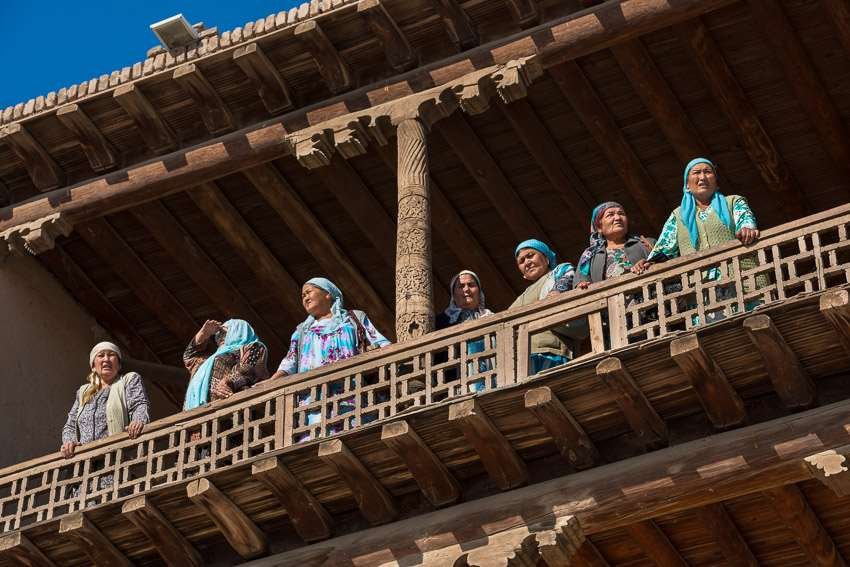
Uzbekistan is a photogenic country, not only because of its nature but especially because of its people. In general, the local population does not mind being photographed. Children will even push their way to the foreground just to get into the frame. You will often receive apples, pears, or nuts as a thank you, especially at markets. If you photograph people, do so with respect. After all, people are not waiting to serve merely as photo subjects. Therefore, take the time to take a photo and show interest, for example by greeting someone first and having a chat. It is also often disarming if the digital photographer shows what is visible on the screen. Always ask people for permission first if you want to photograph them. This can sometimes be done without words: by holding up the camera and using gestures to make it clear that you would like to take a photo. A positive or a dismissive reaction is usually easy to recognize. Respect it if people prefer not to be photographed and remain friendly. People may have very good reasons for not wanting to be photographed. People may wonder what happens to their image. Sometimes religious motives play a role: people believe that a piece of the soul is taken away with a photograph. Others prefer not to be photographed while working, unwashed, or in dirty clothes. Some women do not like being photographed by strange men. It can also happen that people only want to be photographed for payment. Respect this condition and do not take photos secretly from a distance in such a case. This can lead to aggressive reactions.
In museums and at tourist attractions, you sometimes have to purchase a separate ticket to take photos or video recordings. These can be considerably more expensive than the entrance ticket. Be sure to exercise restraint when photographing religious sites and events. It is forbidden to photograph military installations, border posts, and airports.
Financial matters
In Uzbekistan, payments are made in Uzbek sum (UZS). The exchange rate is subject to significant fluctuations.
1 Euro (EUR) = 14,600 Uzbekistani sum (UZS)
(01-05-25)
There are a few ATMs in the capital. In the cities, you can exchange cash euros and dollars at banks, exchange offices, and many hotels. In Tashkent, you can withdraw dollars with your debit card, but not sum.
Credit cards are accepted in a number of large hotels. There are a number of ATMs in Tashkent, some of which are located in the large hotels. Mastercard users must go to the Asaka Bank in the province, and Visa users must go to the National Bank of Uzbekistan (NBU).
You can only exchange sum back into euros/dollars if you possess an original exchange certificate that you received when exchanging at a currency exchange office/bank. There are two versions of these certificates that are difficult to distinguish. The original certificate states: This certificate gives a right to reexchange foreign currency. You can easily pay for souvenirs with euros.
Tips
It is customary in Uzbekistan to leave a tip in restaurants; the guideline for this is 10% of the bill amount. Usually, the tip is listed separately on the bill as “service charge 10%”.
The guide, driver, and tour leader in Uzbekistan also expect a tip at the end. It is customary
€ 2 per day for the guide, € 2 per day for the driver, and € 2 per day for the tour leader.
This amounts to € 6 per day x the number of days.
Health
Information regarding vaccinations may change. Furthermore, what you need depends on previous vaccinations, potential sensitivity to certain medications, pregnancy, age, etc. Therefore, always contact your GP in good time for advice.
We would like to advise you to include an anti-diarrheal medication, such as Immodium, in your travel first-aid kit. The food is different in Uzbekistan, so it is possible that some intestinal problems may arise.
Travelers' Fitness
To participate in our group tours, it is necessary that you are in good mental and physical condition and that you are fully self-reliant. Regular walks are taken over mostly uneven terrain.
Opening Hours
Shops, post offices, and offices are open from 8:00 AM to 6:00 PM. From 1:00 PM to 2:00 PM, most businesses are closed for the lunch break. Department stores in the larger cities are usually open longer. In Tashkent, you see more and more 24-hour supermarkets appearing where practically everything is for sale.
Bazaars start early, around 6:00 AM.
Mail, internet, and telephone
Mail to the Benelux takes one to two weeks and is not equally reliable everywhere. Internet cafes are available in the major cities and tourist areas. Most hotels have Wi-Fi.
Making phone calls from Uzbekistan involves high costs. You can inquire with your mobile provider about the costs of making and receiving calls abroad. Sometimes calling from the hotel room is cheaper. Uzbekistan has the international country code 00998.
Safety
Uzbekistan is a very safe country to travel in. You can certainly walk on the street without any problems, especially during the day. Pickpocketing, bag snatching, and street robberies occur all over the world. It is therefore wise to keep an eye on your belongings and not give people the opportunity to steal things. It certainly does no harm to pay extra attention to your belongings at busy markets, stations, and when getting on and off public transport, although the chance of something happening to you is small.
It is better to carry money and important papers on your person, for example in pockets on the inside of your clothing or in a money pouch. Put a small amount of money in your wallet so that you do not lose all your money if you get pickpocketed. Carry photo and video equipment in a bag or backpack, and do not flaunt jewelry. Make copies of important travel documents such as your passport, visa, airline tickets, and insurance papers. You can also scan these documents and send them to your own email address so that you can access them at any internet café. Do not leave valuable items in the hotel room.
Cultural heritage and UNESCO
- Historic center of Bukhara
- Historic center of Shakhrisabz
- Itchan Kala in Khiva
- Samarkand
- Western Tien-Shan Mountains
National holidays
The national holidays in Uzbekistan are: New Year's Day on January 1, International Women's Day on March 8, Nowruz – the Persian New Year on March 20, Victory Day on May 9, Children's Day on June 1, Independence Day on September 1, Teachers' Day on October 1, and Constitution Day on December 8. In addition, there are religious holidays such as Ramadan and Eid al-Adha, which fall in a different period every year.
Embassy of Uzbekistan in Brussels
Franklin Rooseveltlaan 99, 1000 Brussels, tel: 02-6728844
http://www.uzbekistan.be/
Embassy
Belgium does not have its own embassy in Uzbekistan. The country falls under the embassy in Russia.
Honorary Consul
C2, building 3, Apartment 74, Kh. Samatavoy Str, 100000 Tashkent
Tel. (+998) 71 150 8595 - nlconsulate.tashkent@gmail.com
Extras
Optional additions
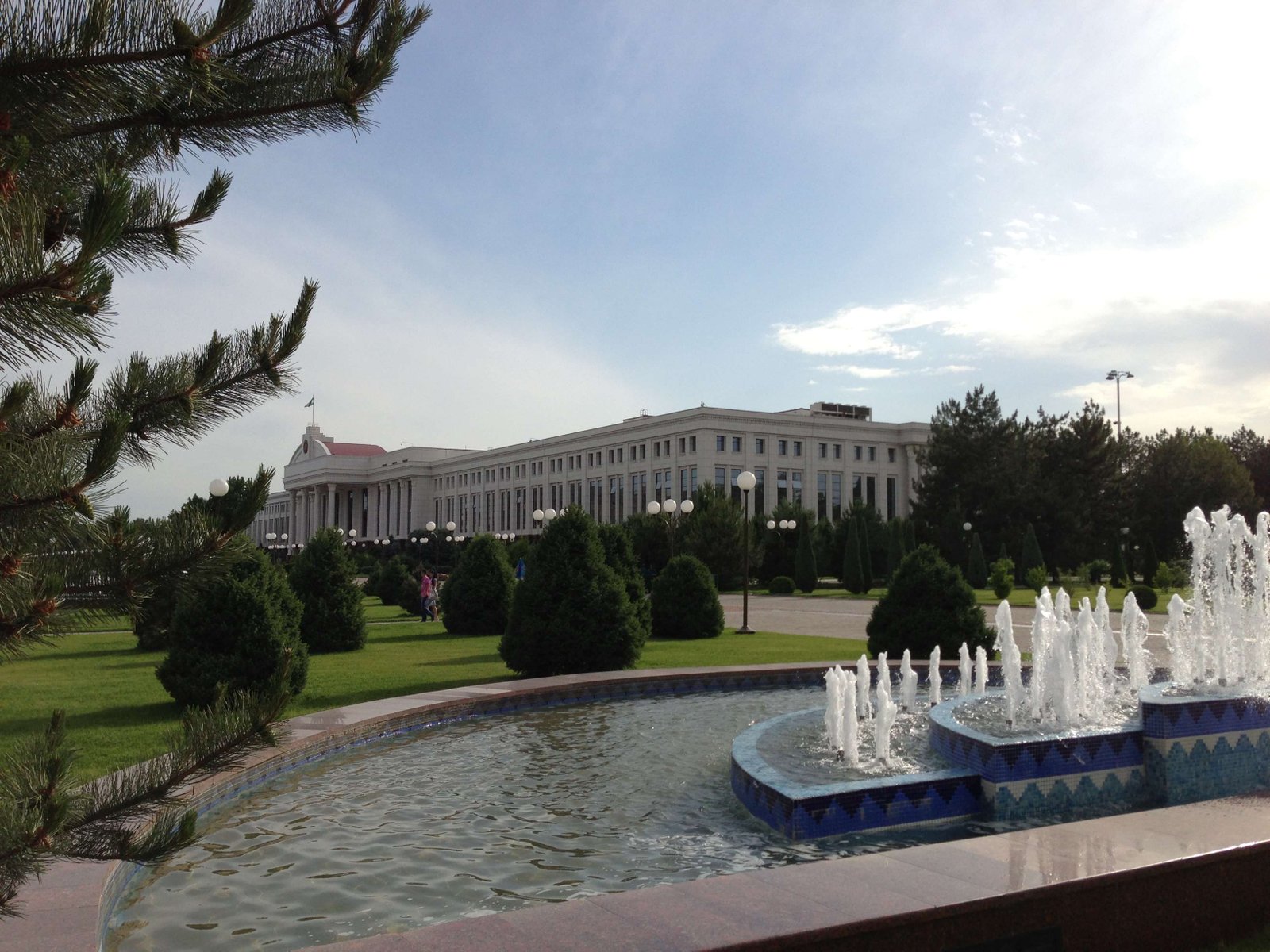
Tashkent city tour
€ 70,- per person
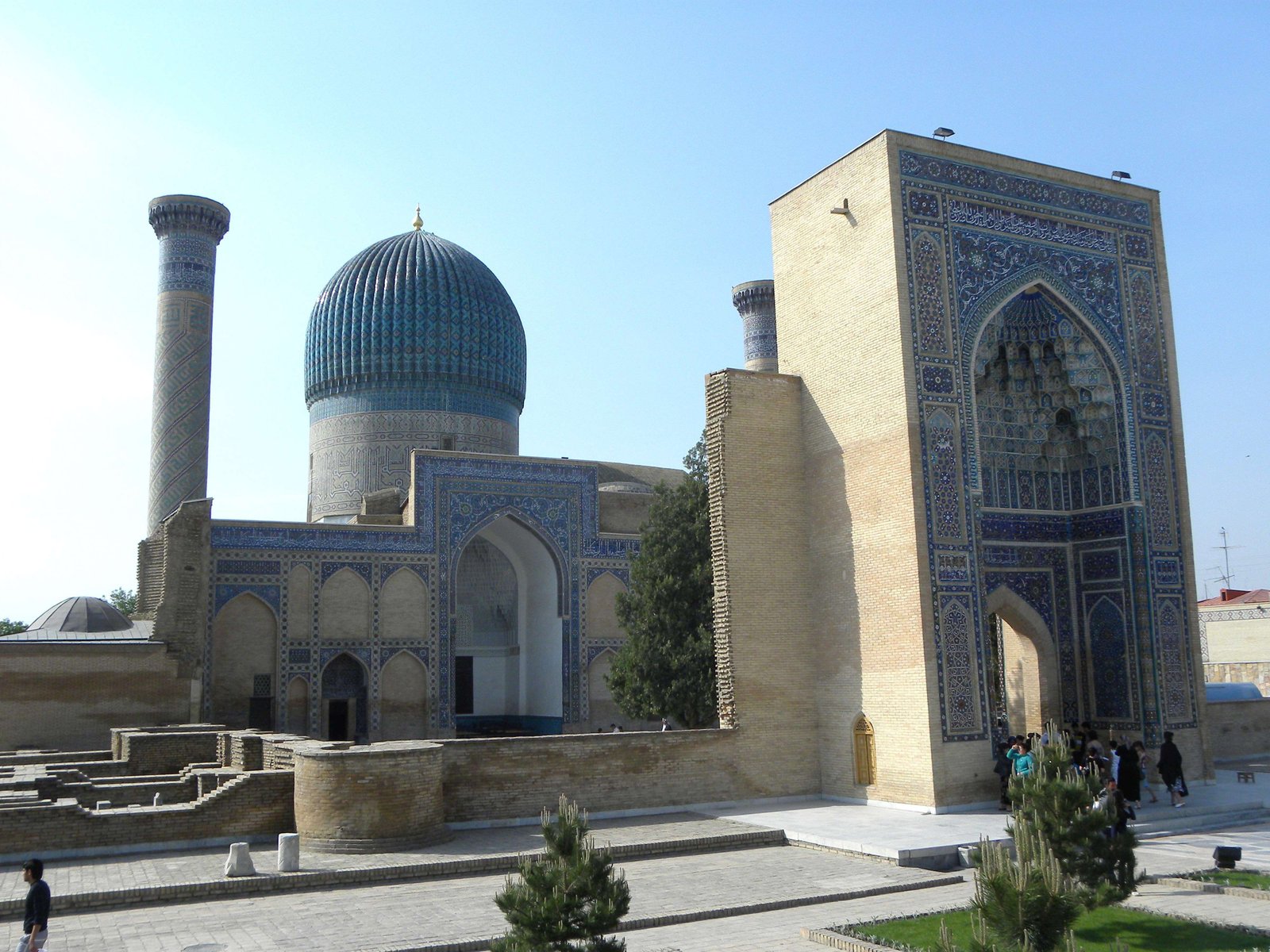
City tour Samarkand
€ 70,- per person
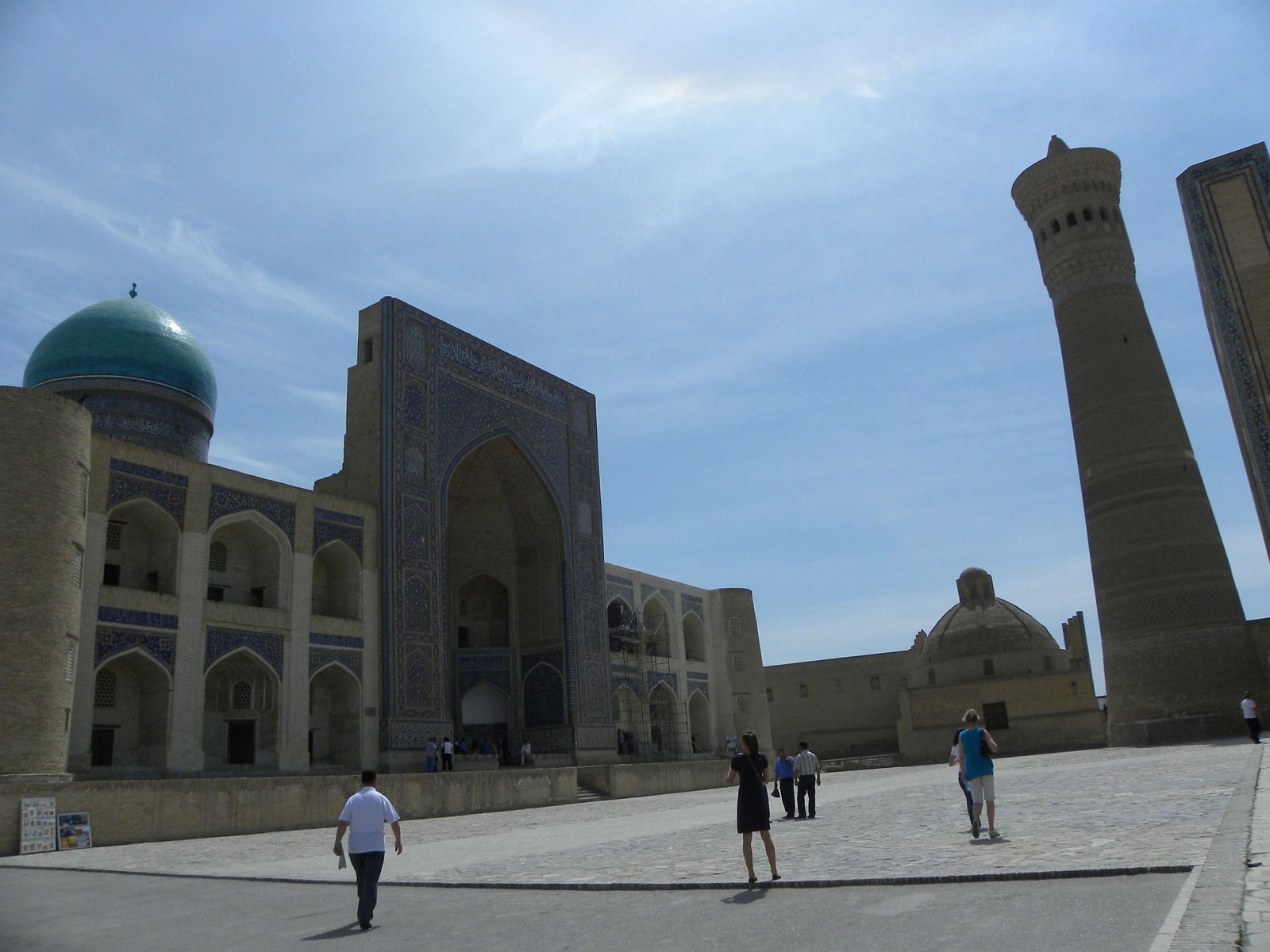
City tour Bukhara
€ 70,- per person
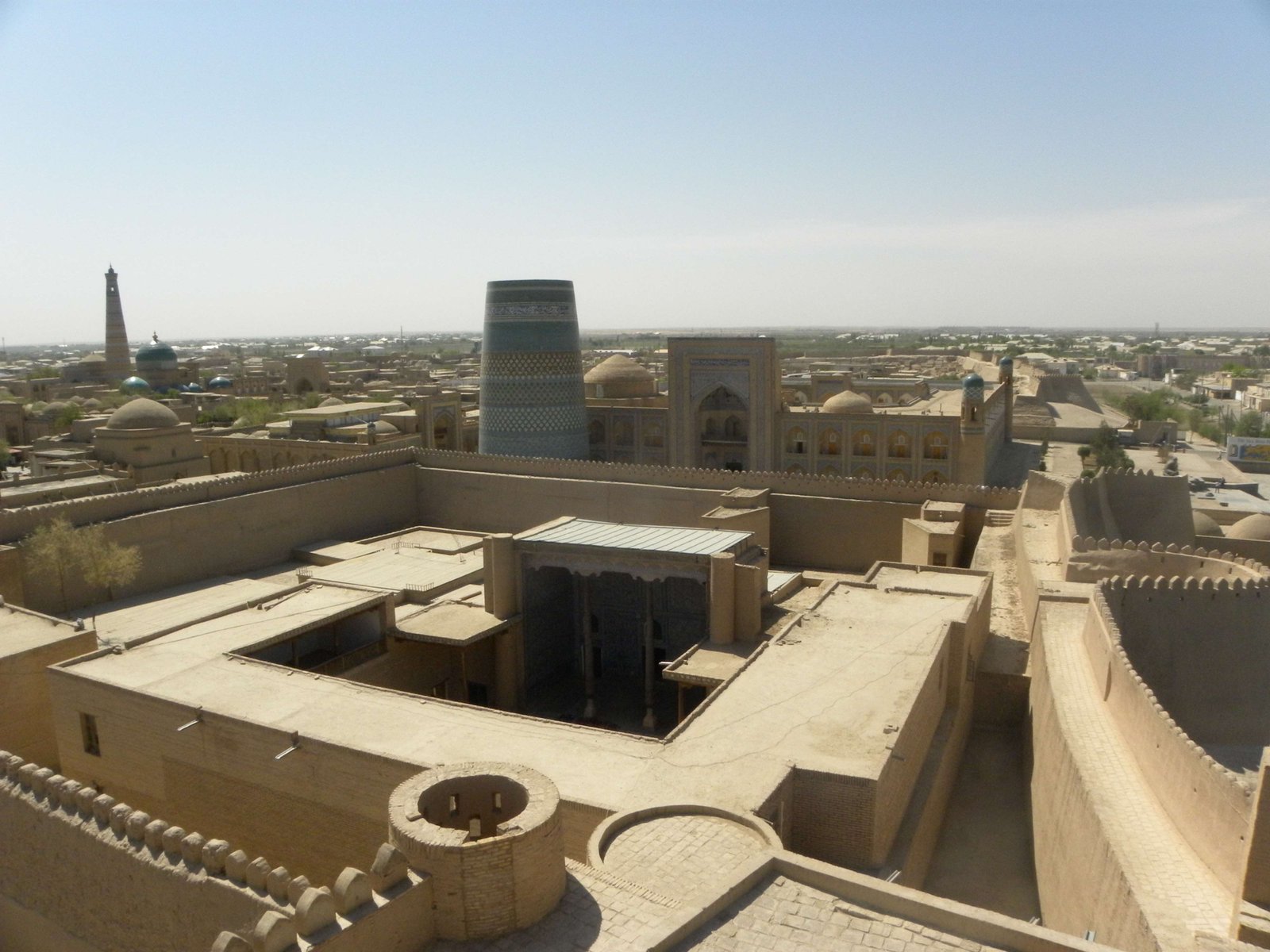
Khiva city tour
€ 70,- per person
Travel Insurance
Protect your trip with suitable travel and cancellation insurance.
Tour Highlights