Group TourEscorted journey
Group Tour
13-Day Group TourPoland & the Baltic States
Four countries, from royal Kraków and Warsaw to Vilnius, Riga and medieval Tallinn.
4 countriesPoland, Lithuania, Latvia, Estonia
Travel styleInternational escorted group tour
Travel periodGuaranteed departures; dates on request
13 days / 12 nights
International escorted group tourGuaranteed departures; dates on request
View full itinerary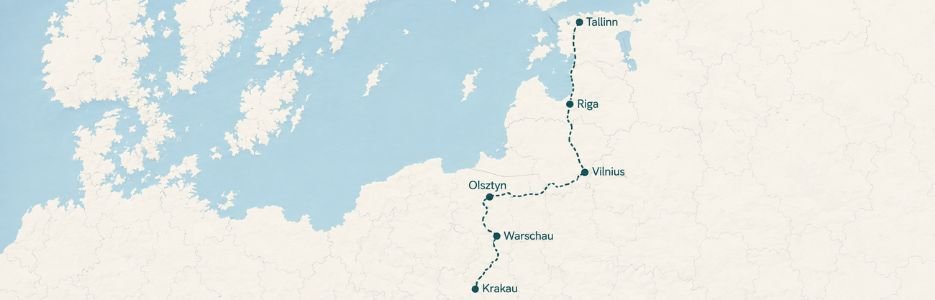
Day 1 – Krakow
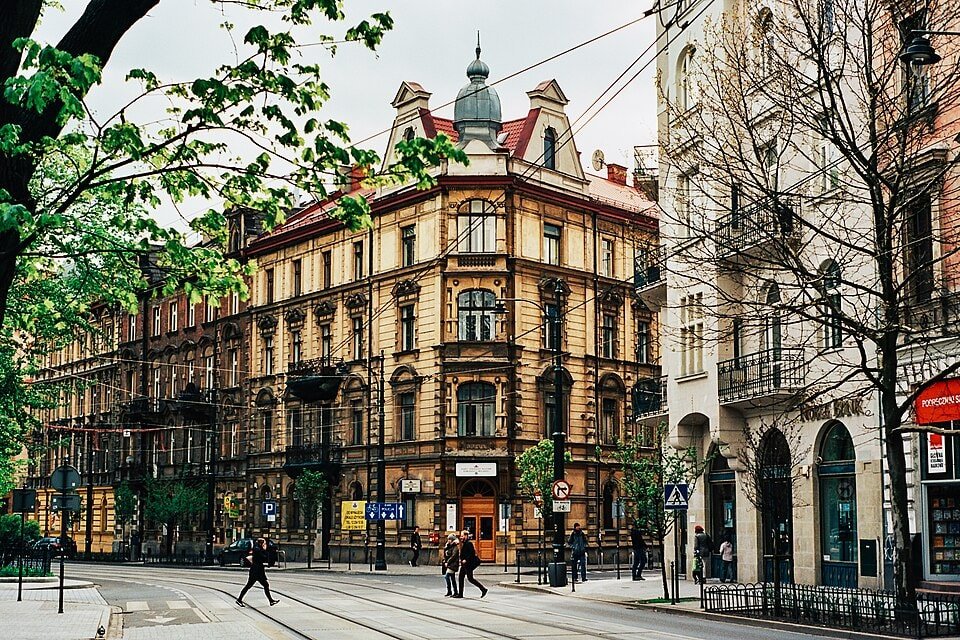
Today you leave for Krakow. After receipt at the airport, the transfer to your hotel follows. In the early evening a welcome meeting will be held and you will meet your fellow travelers.
Day 2 – Krakow
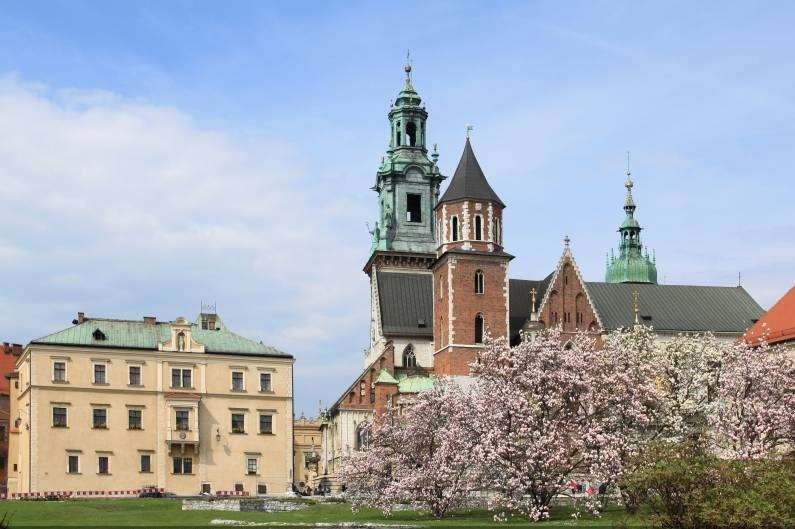
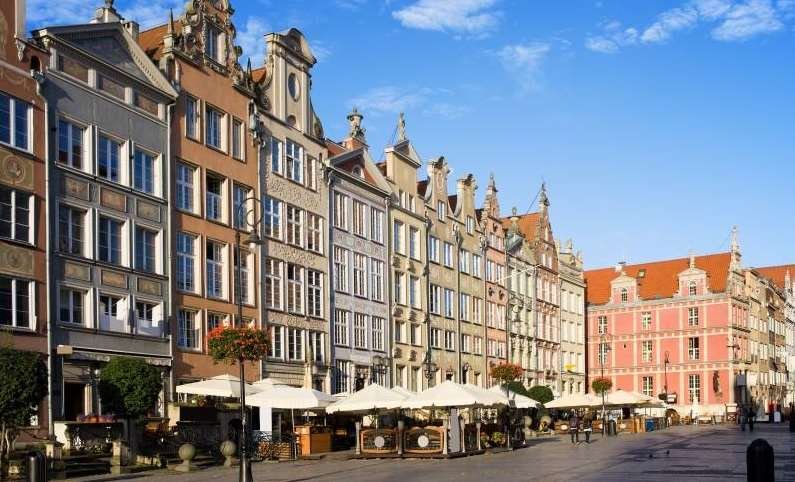
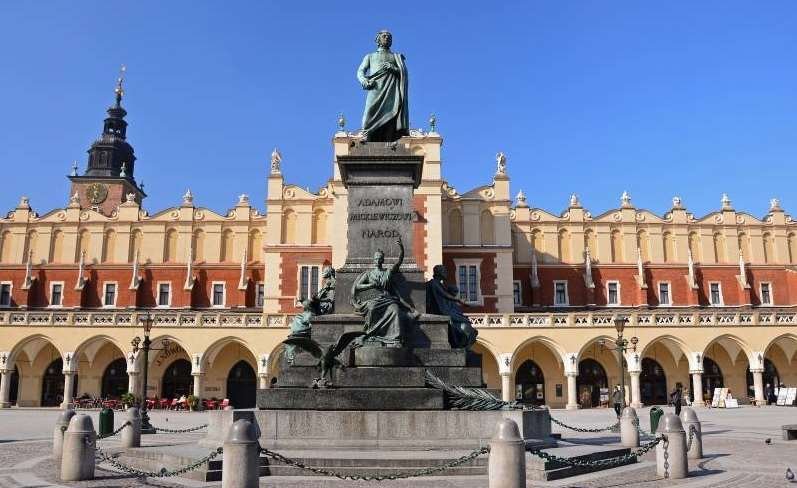
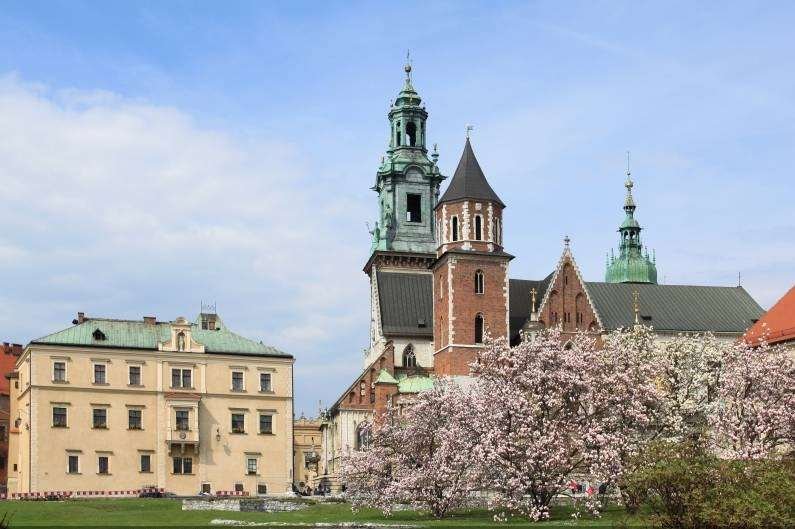
For more than 5 centuries, Krakow was the royal capital of Poland. The stately and elegant atmosphere can still be felt through the many sights. During the city tour you will receive a tour of the Old City where you will see, among other things, the Church of the Blessed Virgin Mary, the University Building and the Cloth Hall. We also visit the Wawel Cathedral and the palace. In the afternoon an optional excursion is offered to the famous Wieliczka Salt Mine, an impressive labyrinth of tunnels up to 327 meters deep.
Day 3 – Krakow – Warsaw
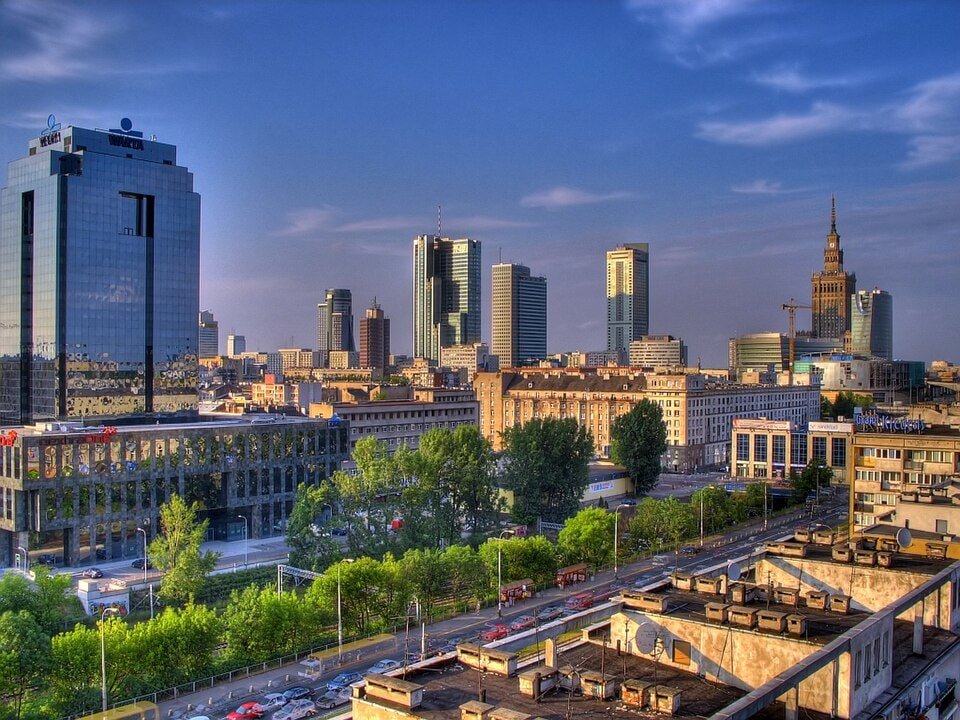
After breakfast you can optionally participate in the excursion to Auschwitz where 1.3 million people were deported. In this extermination camp you will visit the Martyrdom museum, which will leave a very deep impression. After the visit we return to Krakow.
In the afternoon we travel by train to the capital of Poland, Warsaw.
Day 4 – Warsaw
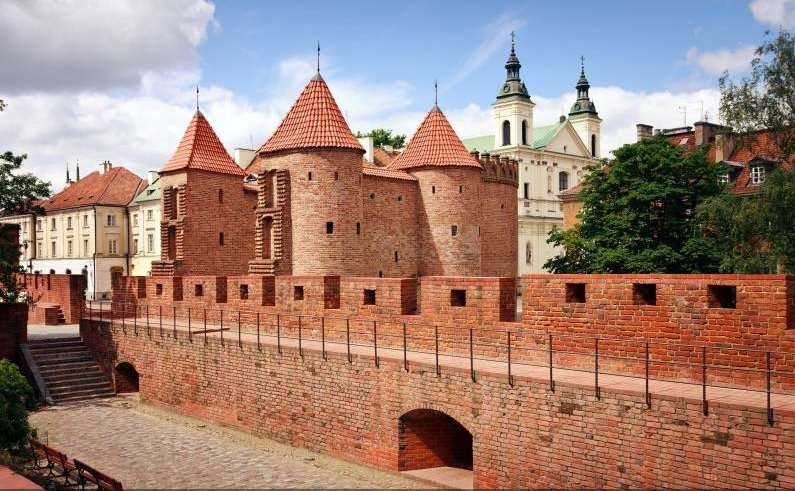
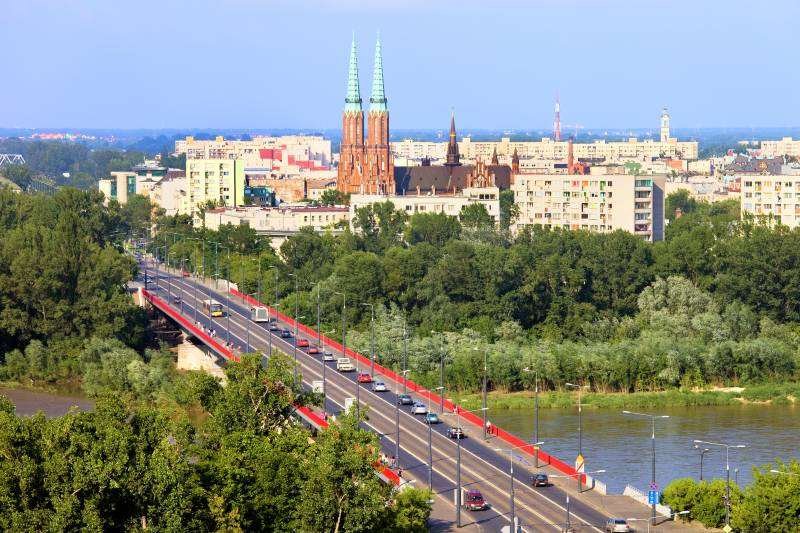
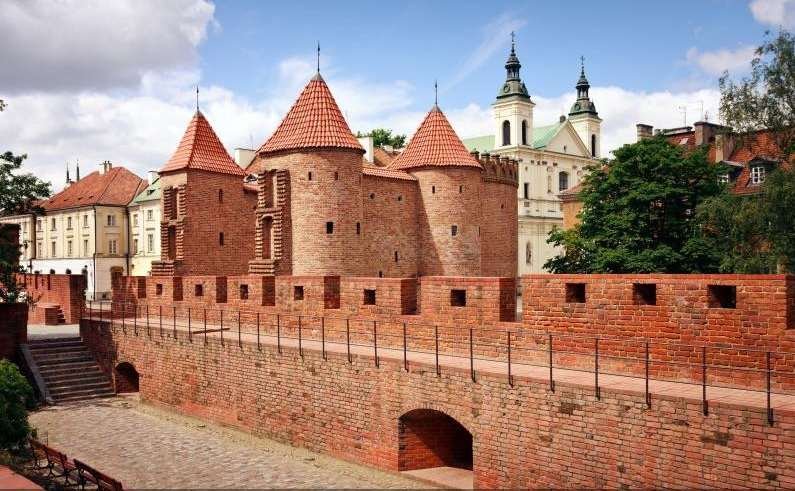
Since the fall of communism, Warsaw has transformed rapidly. The old city center breathes the atmosphere of former times and the view of the Stare Miasto with the Royal Palace is fairytale-like. During the city tour the guide takes us to the main sights including the Old Town with St. John's Cathedral and the Barbican, the city walls of Warsaw. In the afternoon an optional excursion to the Royal Lazienki Park is offered.
The palace, also called the “Palace on Water”, was the summer residence of the last Polish King. In the evening you can - optionally - enjoy a Polish dinner in the Gospoda Kwiaty Polskie restaurant.
Day 5 – Warsaw – Bialystok
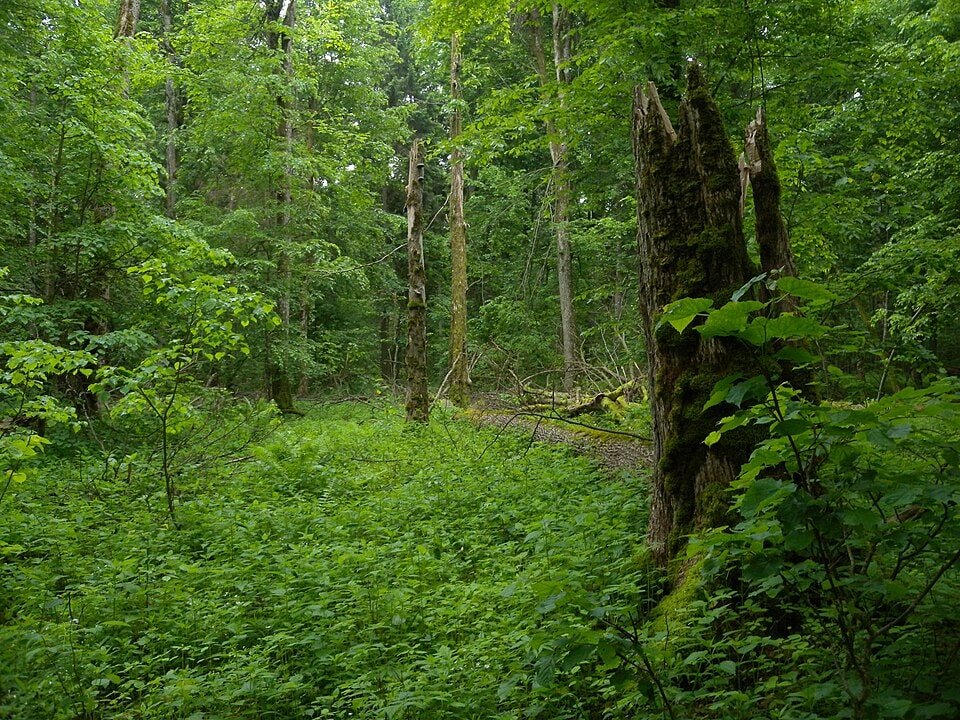
Today we drive through the forests of eastern Poland to the Podlasie region and Bialowieza, one of the oldest forests that used to extend over a large part of Europe. Here we will visit the Bialowieza National Park with its large population of bison. Along the natural path through the woods and forests we continue our way to Bialistok where we arrive at the hotel in the afternoon. Late in the afternoon we get to know this pearl of the north-east of Poland and visit the Branicki Palace located near the center. Because of its royal appearance, including many fountains and statues in the park, this palace is also called the Versailles of Poland.
Day 6 – Bialystok – Vilnius
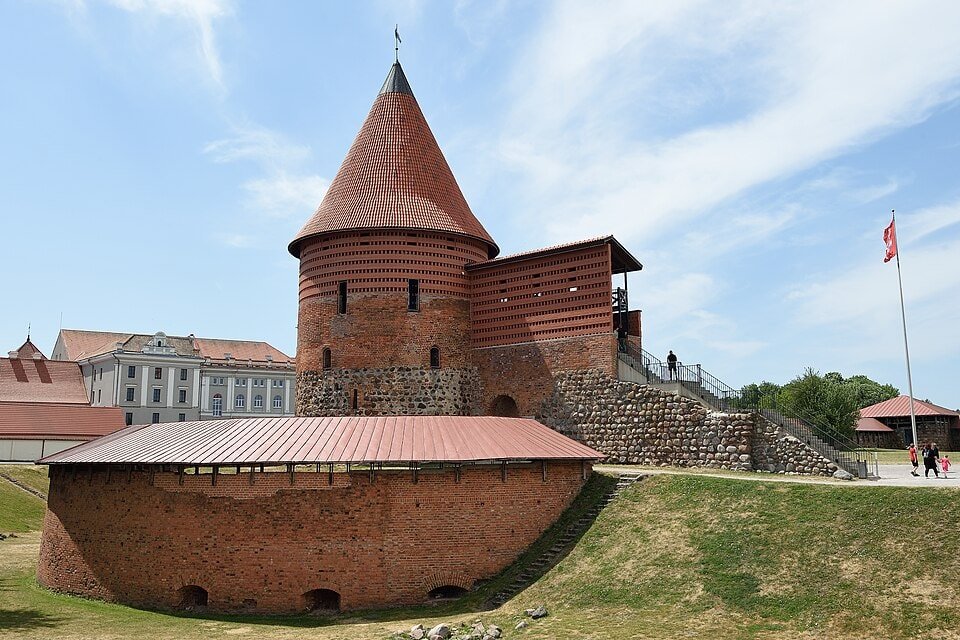
Today we travel further and pass Kaunas, Lithuania's second city and former capital. We take a short city tour of the Old Town and see the 13th century Kaunas Castle and the beautiful Town Hall, also known as the “White Swan” and the 14th century Vytautas Church and the Basilica of Kaunas. We drive further east and arrive in Vilnius.
Day 7 – Vilnius – Trakai – Vilnius
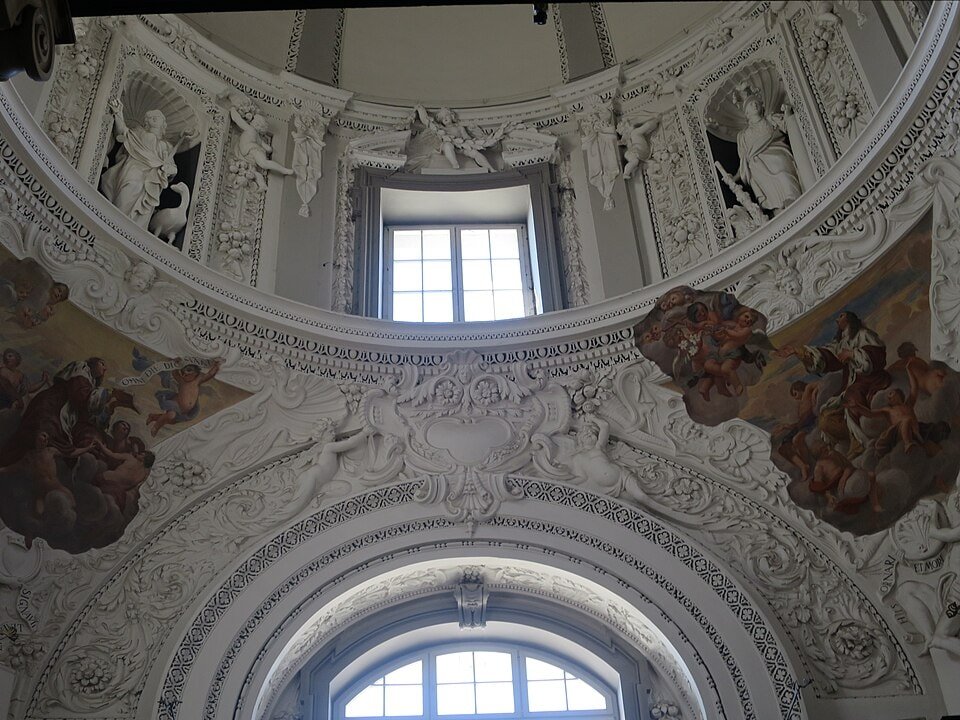
During the tour of the historic center of Vilnius we will see the Vilnius Cathedral, Gediminas Tower, Peter and Paul Church, St. Anne's Church, the Old University and the Dawn Gate. The afternoon offers the opportunity to make an optional excursion to Trakai, the medieval capital of Lithuania, with the well-preserved Trakai Castle, which is beautifully situated on an island in Lake Galve. In the evening you can optionally enjoy a folklore dinner in Senoji Trobele restaurant.
Day 8 – Vilnius – Rundale – Riga
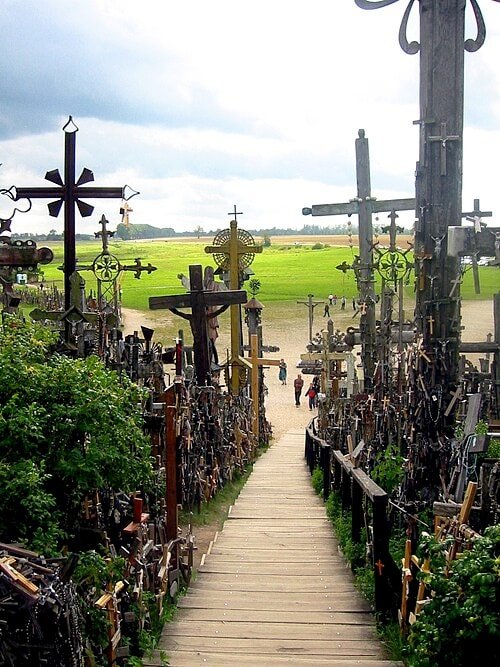
Departure to Riga, the capital of Latvia, with a stop at the Hill of Crosses along the way. This location has been a place where wars, oppressions and resistance have been commemorated since the 14th century. Nowadays a place where tens of thousands of crosses stand. Continuing towards Riga, we visit the 18th century Rundale Castle, designed by the Italian architect F.B. Rastrelli is built. The palace was once the summer residence of the Duke of Courland and Semigallia. We continue the journey through the beautiful hilly landscape before reaching Riga in the late afternoon.
Day 9 – Riga
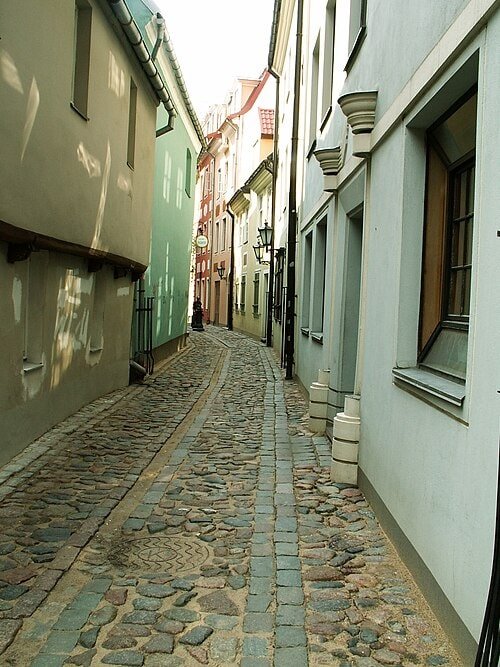
Today you will be introduced to the Latvian capital Riga. In the medieval city we walk through the beautiful narrow streets and see, among others, “De Drie Gebroeders”, the oldest houses in the country, built in the 15th century. Naturally, we also visit Riga Castle, today the seat of parliament, the freedom monument and the Swedish Gate from 1698. The Cathedral was consecrated in 1226 and is the largest cathedral in the Baltic States. The imposing building is a mixture of various architectural styles. St. Peter's Church is a good example of Gothic architecture in the Baltic States and was once built with the intention of becoming the most important church in the city. In the afternoon an optional excursion is organized to Jurmala, the bustling seaside resort. The city is known for its wooden architecture and beautiful sandy beaches. In the evening you can optionally attend an organ concert in the Cathedral.
Day 10 – Riga
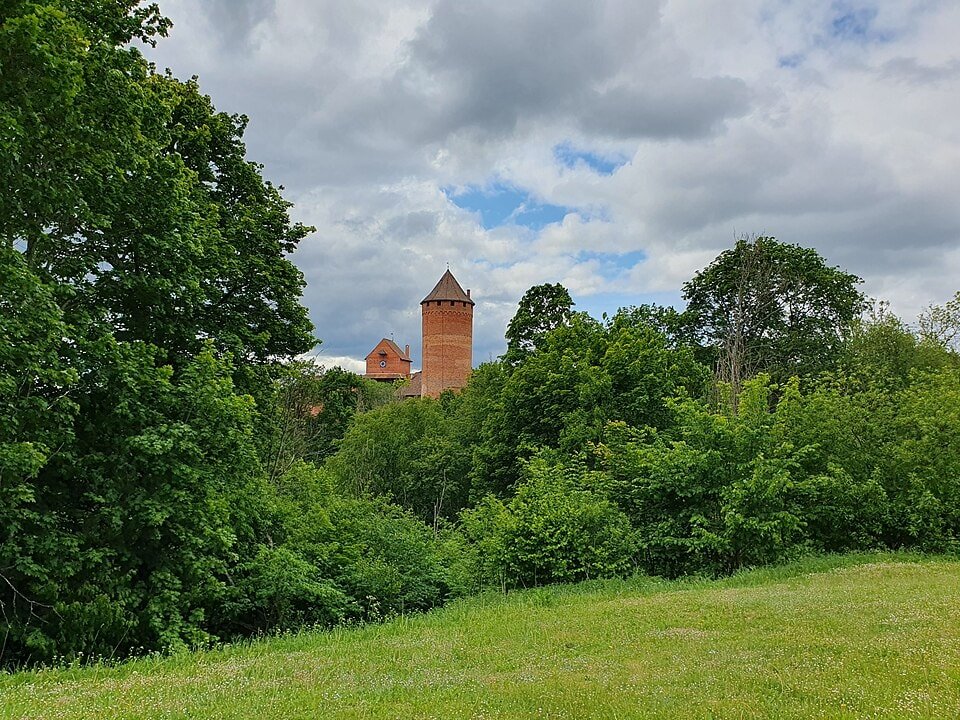
After getting to know Riga, there is the opportunity to discover medieval Latvia. This optional morning excursion takes us to the breathtaking scenery of Gauja National Park and the town of Sigulda. We will hear the medieval Latvian legend of the Rose of Turaida and see the ruins of the Episcopal Castle and the Castle of the Knights of the Sword before returning to Riga.
In the afternoon you can optionally visit the Ethnographic open-air museum, a spatial exhibition of 18th-century rural life.
Day 11 – Riga – Parnu – Tallinn
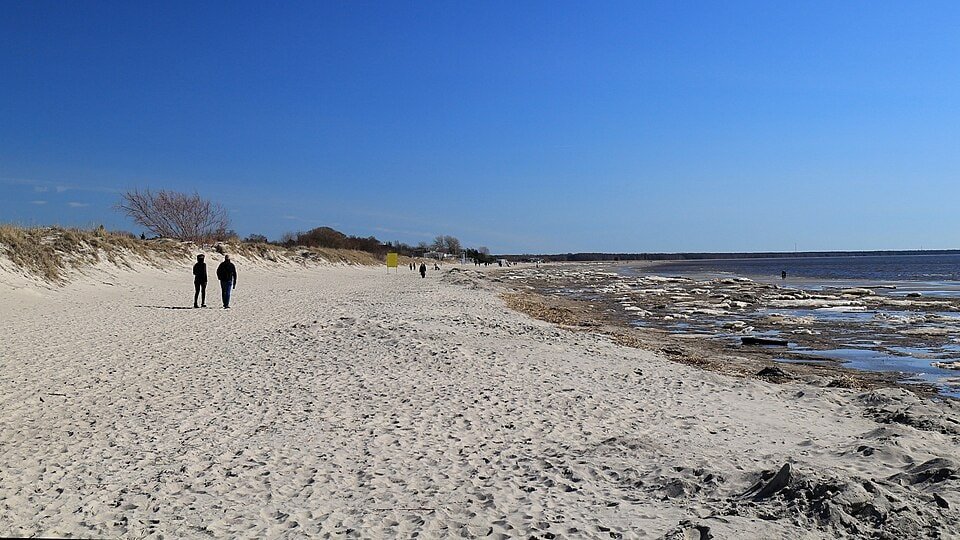
Today we leave Riga behind and continue our journey to Parnu where we will take a small city tour. This coastal town is known as a health resort as the first spa opened here in 1830. The last part of the journey to Tallinn runs through the vast forests of Estonia.
Day 12 – Tallinn
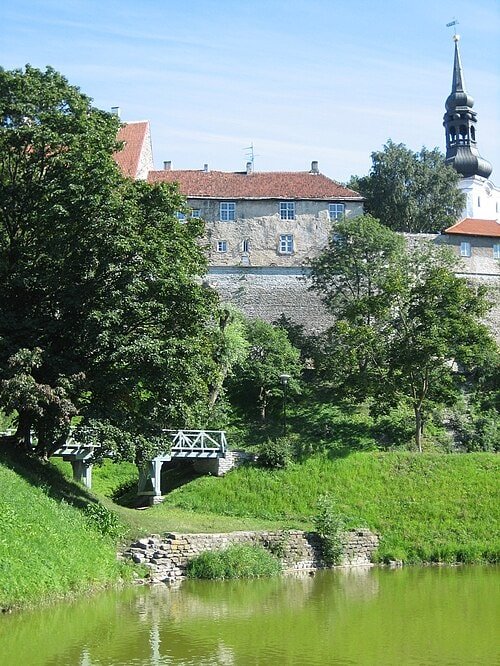
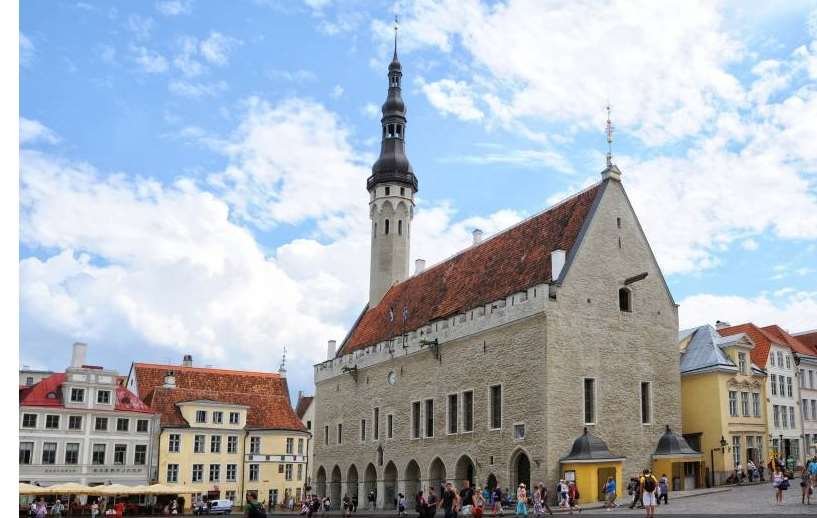
Tallinn is one of the best preserved medieval cities in Europe. The city was a crossroads of trade routes for centuries and has played a major role in international trade relations. The Tallinn Old Town tour introduces you to the Gothic architecture of the Baltic States. During the walk you will see Toompea Castle, now the seat of the Estonian Parliament. Unfortunately, little remains of the original Danish castle from 1219 as Catherine the Great ordered most of the castle to be renovated in Baroque style. The Duomo Cathedral, the beautiful Russian Orthodox Alexander-Nevsky Cathedral built in the 19th century on behalf of Tsar Alexander III and the medieval Old Town Hall are also featured. In the afternoon we optionally visit the Kadriorg park, the most notable work of art in Estonia. It is a popular place with the locals, the beautiful palace gardens and swan lake invite you for a lovely walk. Here we visit the palace of the same name, built on behalf of Peter the Great - for his wife Catherine I in the early 18th century. The palace has a large collection of art from both Western Europe and Russia from the 16th – 18th centuries, ranging from paintings to sculptures. Part of the palace serves as the residence of the current president. In the evening you can optionally enjoy a medieval dinner in the Maikrahv restaurant.
Day 13 – Tallinn
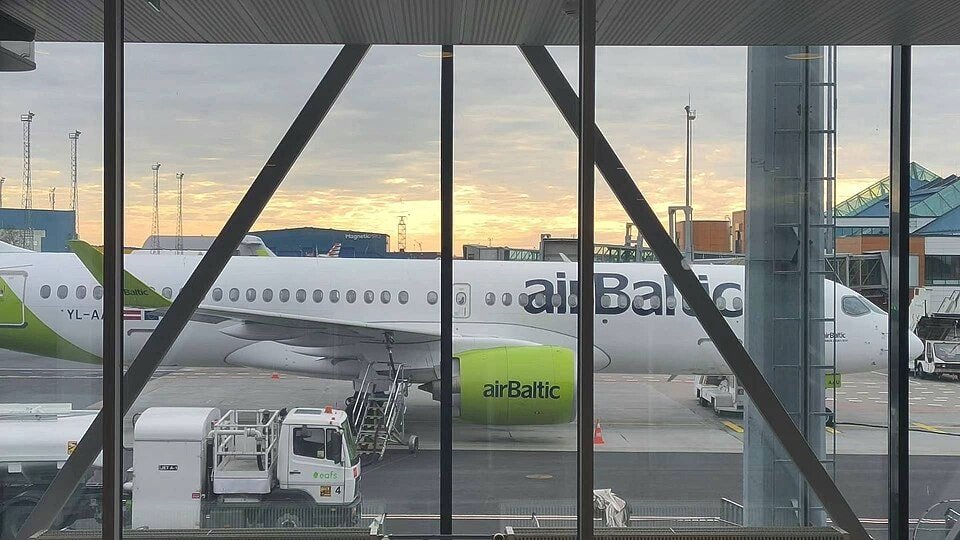
Today you will be transferred from your hotel to the airport for your return flight.
Included
Part of the program
- Return flight from Amsterdam with Lufthansa or equivalent IATA airline
- Transfers from the airport to the hotel and vice versa
- English and/or German speaking guides (of your choice, to be specified when booking)
- Overnight stays in comfortable 4-star hotels based on: bed/breakfast
- All transport on site with air conditioning
- Train ticket high-speed train 2nd class Krakow - Warsaw
- All excursions as described include all entrance fees
- Airport taxes and fees
Not included
- Reservation fees
- Calamity fund € 2.50 per booking of max. 9 people
- SGR consumer contribution €5 per person (as of February 1, 2021)
- Travel and cancellation insurance; see Travel Insurance under Extras.
- Additional costs on site: tips, optional excursions, etc.
Conditions and notes
- Extension possible, contact Calaio Viajes y Turismo for further information.
Hotel Information
Accommodation along the route
Kraków · Golden Tulip Krakow City Center · 4-star hotel
Ideally located in the heart of the city, only 500 metres from Kraków’s Main Market Square and a few minutes on foot from the attractions of the old town.
Facilities: Free Wi-Fi, lift, conference room, air conditioning throughout, an internet point, à-la-carte restaurant and hotel bar.
Rooms: Classically furnished, earth-toned rooms with air conditioning, flat-screen television, seating area and wardrobe; bathrooms have a shower.
Warsaw · Radisson Blu Sobieski · 4-star hotel
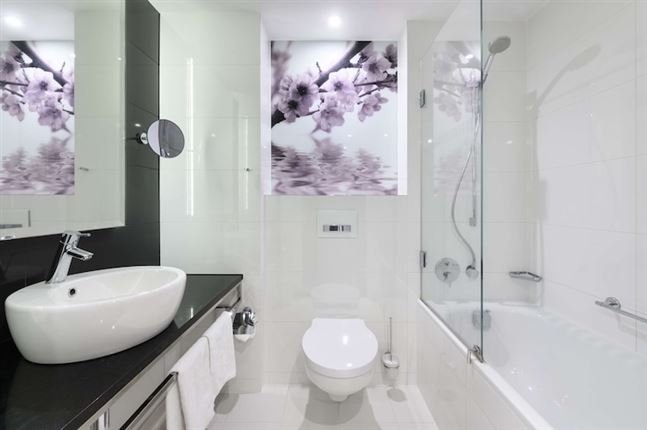
The source lists this hotel without additional descriptive, facilities or room information.
Białystok · Hotel Ibis Styles Bialystok · 3-star hotel
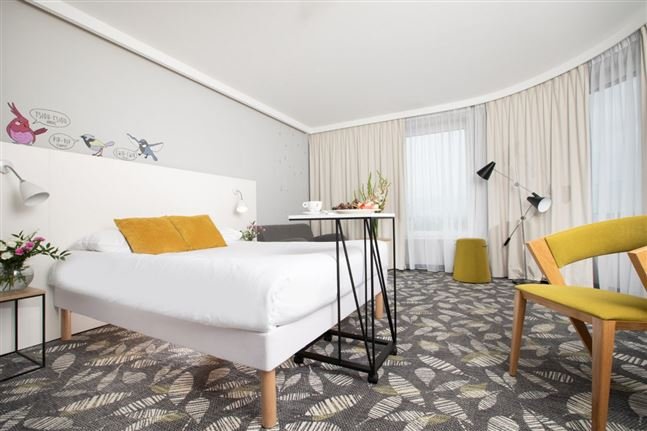
Located in the green part of the city centre beside Białystok’s principal attractions, approximately five minutes on foot from the Town Hall, Branicki Palace and Podlasie Opera House.
Facilities: Bar, QuQułka restaurant, sauna, fitness facilities, free underground parking, Wi-Fi and a modern conference centre; the hotel is pet-friendly.
Rooms: Modern rooms with individually controlled air conditioning, desk, telephone, flat-screen television, free Wi-Fi and a bathroom with shower and hairdryer.
Vilnius · Hotel Radisson Blu Lietuva · 4-star hotel
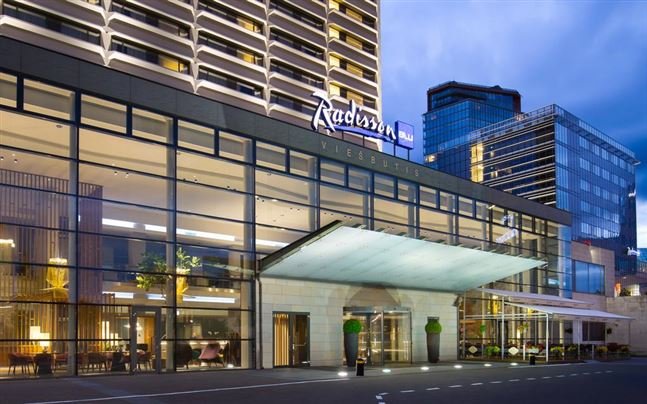
An elegant hotel on the bank of the River Neris in central Vilnius.
Facilities: Restaurant serving international dishes, a sky bar on the 22nd floor with views over the old town, fitness centre, sauna and private parking.
Rooms: Spacious, modern rooms with air conditioning, LCD television, safe and minibar; modern bathrooms include a hairdryer.
Riga · Hotel Radisson Blu Latvija · 4-star hotel
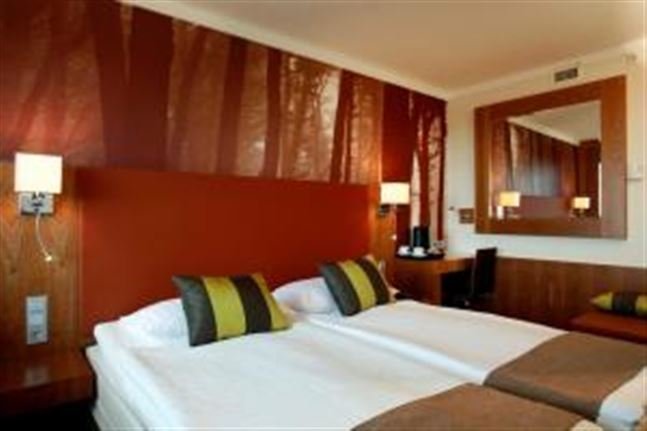
Located in the heart of Riga, 400 metres from the old town and 300 metres from the Freedom Monument.
Facilities: Several dining venues, including the Esplanade Restaurant and Skyline Bar, plus the ESPA Riga spa and wellness centre with an 18-metre pool, saunas, steam rooms and treatments; currency exchange and luggage storage are available.
Rooms: Rooms with minibar and tea- and coffee-making facilities, modern bathroom with toiletries, hairdryer and bath or shower; most rooms include a seating area.
Tallinn · Hotel Radisson Blu Olympia · 4-star hotel
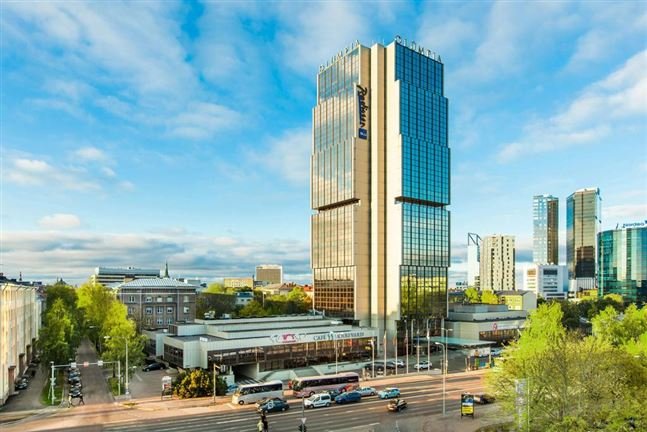
Located in Tallinn’s business district, less than 1 km from the old town, with city views from the upper floor.
Facilities: Reception and lobby, Restaurant Senso serving international and national dishes, Englishman Pub, wellness centre with sauna and indoor swimming pool.
Rooms: Spacious, modern rooms with safe, flat-screen television, telephone, tea- and coffee-making facilities and free Wi-Fi; bathrooms include a hairdryer.
Country Information
Practical country information
Poland
General
Poland is known for its many small towns, 23 national parks, and the Auschwitz extermination camp. Additionally, Poland is a great place for winter sports. A trip through Poland means a unique journey in a country that impresses with 14 sites, 13 of which are cultural and 1 natural site listed on the UNESCO World Heritage List. Poland has unusual landscapes, colorful gardens, valuable wooden temples, (Orthodox) churches, and beautiful cities. Furthermore, Poland has the Bialowieza Forest, one of Europe’s primeval forests.
Location
Poland is a republic in Eastern Europe. The total area of Poland is 312,684 km². Poland borders seven countries: Germany, Lithuania, Kaliningrad (Russia), Belarus, Ukraine, the Czech Republic, and Slovakia. To the north, it borders the Baltic Sea. The island of Wolin is located in the northwest.
Climate
The best time to travel to Poland is from May through September. Poland has a continental climate in the east and a maritime climate in the west.
Religion
Approximately 97% of the population is Roman Catholic. Approx. 1.5% belong to the Russian Orthodox Church and 0.5% are Protestant, the majority of whom are Lutherans. There are also Old Catholics. Most Russian Orthodox church buildings are found in the east of the country.
Food and drink
Polish cuisine is mainly known for its dishes with potatoes, meat, and cabbage. Some typical Polish dishes are: Zurek, a rye flour soup that tastes very sour, or Bigos, a stew of cabbage, sausage, bacon, onion, and sometimes some plums. Another dish for vegetarians is pierogi, dough filled with cabbage or mushrooms. A well-known dessert is gofry, a waffle with whipped cream, fruit, or Nutella.
Poland is primarily known for its vodka with many different flavors. There are also special varieties of Polish beer. Piwo Ciemne Pene Karmelow is Polish caramel beer. Another Polish alcoholic drink is Krupnik, a honey liqueur.
Drinking water
Tap water is lightly chlorinated and is safe. However, it can cause stomach and intestinal problems. You can prevent these problems by drinking bottled water.
Electricity
Voltage: 230 volts. For the type of socket used in Poland, you need a plug with a round recess for the earth connection. The flat plugs without earthing, commonly used in Belgium, with two thin round pins, always fit.
Time difference
There is no time difference between the Benelux and Poland.
Language
Most spoken language: Polish. Some German is understood and spoken in Silesia. You can usually get by with English as well.
Luggage and clothing
There are no special dress requirements for Poland. However, we advise women to bring a scarf so that you can drape it around your head if you enter a church.
For all our trips, you are allowed to bring one suitcase per person on the bus with a maximum weight of 20 kilos. This regulation may therefore differ from the rules of the airline operating your flight. Nowadays, the rules and dimensions for checked baggage and hand luggage vary by airline and by destination. You can find the current rules per airline on the website of the operating airline(s). If you are using a domestic flight, different baggage conditions apply. Check the current rules of the relevant airline.
Passports, visas and customs regulations
For travel to Poland, you need a valid passport or EU identity card
Photography and filming
The use of a camera or video camera in museums and at tourist attractions is usually permitted. The use of a flash is often prohibited in museums and churches. Photographing a priest or monks is not allowed. Furthermore, it is forbidden to photograph military and strategic objects. It is also not appreciated if you want to capture the underbelly of society (dilapidated buildings, drunk people, etc.). The local population does allow themselves to be photographed, but please ask for permission first; that is the polite thing to do.
Money Matters
The currency of Poland is the zloty (PLN). In MAY 2025, €1 is approximately 4.25 zloty.
Credit Cards
Credit cards are accepted in larger hotels and restaurants. Please note that a PIN code is increasingly required for credit card payments or cash withdrawals. Therefore, request this PIN code from your credit card company or bank in good time.
Exchanging money
You can exchange money at the border or at banks and exchange offices. Hotels often exchange at a less favorable rate than a bank.
Tips
For most group tours, your tour guide will suggest setting up a joint tip fund so that you do not have to worry about anything during the trip. In countries where we use local tour guides and drivers, it is customary to show your appreciation for the services provided by giving a tip. Guides, drivers, and service staff appreciate a tip. On average, you give a tip of about 10%.
Health
Medical care in Poland is of a reasonable standard. You are advised to take out good travel insurance.
Doctors, pharmacies, and hospitals
Pharmacies can be found in all cities. Outside opening hours, you are referred to a 24-hour pharmacy. Bring special medicines with you in ample quantities (in the original packaging) or ask your doctor for a prescription. It is advisable to bring your own travel first-aid kit with regular medicines.
In case of illness, you can go to a hospital in the cities. Most embassies have a list of good hospitals and clinics, as well as the names of general practitioners, specialists, and dentists. Please note that you may have to pay cash for medical care. In the event of hospitalization, contact your insurance company immediately so that they can arrange for payment.
Vaccinations
Vaccinations are not mandatory for Poland.
It is advisable to seek advice regarding the medical precautions applicable to you. You can contact your GP for this.
Travelers' Condition
To participate in our group trips, it is necessary that you are in good mental and physical condition and that you are fully self-reliant. Regular walks are taken over mostly uneven terrain.
Opening Hours
Most shops are open from Monday to Friday from 10 or 11 a.m. to 8 p.m. and on Saturday from 9 a.m. to 2 p.m. or 4 p.m.
Grocery stores are open from Monday to Friday from 6 a.m. to 7 p.m. and on Saturday from 7 a.m. to 1 p.m.
Supermarkets remain open until 9 or 10 p.m. There is an increasing number of shops in cities that are open 24 hours a day. Small shops usually observe a lunch break.
Restaurants: The majority of restaurants are open from 12 p.m. to 3 p.m. and from 5 p.m. to 9 or 11 p.m. Many restaurants are closed once a week, usually on Mondays.
Post, internet, and telephone
You can buy stamps at the local post office almost everywhere and find a characteristic red mailbox. Post offices are open on weekdays from 10:00 a.m. to 6:00 p.m. and on Saturdays from 9:00 a.m. to 2:00 p.m. The main offices in larger cities are usually open longer. Mail takes 3 to 7 days to reach another country in the European Union.
Internet:
In the major cities, the internet is very accessible, including via Wi-Fi. Most hotels offer free Wi-Fi, although sometimes you may need to pay a small fee for it. With a laptop, you also have free access to hotspots in the centers of the major cities. Increasingly, pubs and cafes in the cities are also offering free internet.
Telephone:
In general, you have good coverage in Poland. You can make international calls from tourist and large towns. In small towns, you can connect to the outside world via an operator at a post office.
Public transport
In the major cities, you can travel anywhere by bus, tram, or trolleybus. In Warsaw, you can also travel by metro. You can buy tickets at so-called Ruch kiosks, at some grocery stores, or from the bus or tram driver. Additionally, you can also visit specific ZTM sales points and vending machines. If you are not in possession of a valid ticket, you may receive a hefty fine. You can take the bus or train between the major (tourist) towns.
Safety
There are currently no particular safety risks regarding travel to Poland. This information is subject to change. We therefore advise you to check the national government website for up-to-date information.
Cultural Heritage and UNESCO
- Auschwitz-Birkenau Concentration Camp
- Bialowieza Forest
- Zamosc
- Historic Centre of Warsaw
- Malbork Castle
- Krakow
- Muzakow/Muskauer Park
- Churches of Peace in Jawor and Swidnica
- Medieval City of Torun
- Wooden Churches of Southern Lesser Poland
- The Centennial Hall in Wroclaw
- Wieleczka salt mines
- Kalwaria Zebrzydowska
- Orthodox church buildings
National holidays
Most traditions and customs are connected with Christian holidays. A well-known example of this is the pilgrimage held in August to the Black Madonna of Czestochowa. Another pilgrimage destination is Mount Calvary in Poland, which is an accurate replica of the mountain in Jerusalem where Jesus was crucified. Furthermore, the fixed public holidays are: New Year's Day on January 1, Epiphany on January 6, Good Friday, Easter, May Day on May 1, Proclamation of the Constitution on May 3, Europe Day on May 9, Ice Saints from May 11 to 14, Ascension Day, Children's Day on June 1, Pentecost, Corpus Christi on June 15, Father's Day on June 23, All Saints' Day on November 1, All Souls' Day on November 2, Independence Day on November 11, National Day on November 29, and Christmas on December 25 and 26.
Polish Embassy in Brussels
Stevinstraat 139, 1000 Brussels, tel: 02-7804500
http://www.bruksela.msz.gov.pl/nl/bruksela_be_a_86
Belgian Embassy in Warsaw
Ulica Senatorska 34, 00-095 Warszawa, Poland, tel: +48-225512800
http://poland.diplomatie.belgium.be/en
Polish Embassy in The Hague
Alexanderstraat 25, 2514 JM The Hague, tel: 070-7990100
http://www.haga.msz.gov.pl/nl/root
Dutch embassy in Warsaw
Ul. Kawalerii 10, 00-468 Warszawa, Poland, tel: +48-225591200
http://polen.nlambassade.org/
Lithuania
General
Both culture and nature lovers will find plenty to enjoy in Estonia, Latvia, and Lithuania. Together, the three countries are known as the Baltic States, which are often visited as a single trip. The beautiful medieval Hanseatic city of Tallinn, the Art Nouveau city of Riga, and the Southern European-influenced Vilnius alternate with vast forests, quiet sandy beaches, and unique nature reserves. Individually, all three are intriguing countries. In fact, they deserve to be traveled separately, as they are very different in terms of history, culture, and nature. However, the course of history has inextricably linked them. As a result of their rich history, you will find traces of German, Polish, Russian, and Scandinavian influences here, which is visible in the architecture.
Location
In 2004, the three Baltic countries, the Baltics, joined the European Union. To the east, they border Russia, and to the west, the Baltic Sea.
Lithuania covers no less than 65,000 km² and has 3.8 million inhabitants, of which 83% are Lithuanians and 13% are Russians and Poles. Lithuania borders Belarus, Poland, and Kaliningrad to the south and Latvia to the north. Thus, it is the southernmost country of the Baltic States.
Climate
The coastal areas along the Baltic Sea closely resemble a maritime climate, while inland one sees the characteristics of a continental climate: drier, warmer in summer, and colder in winter. The (short) summers are pleasant, with temperatures rising to around 25°C. In winter, it can be very cold with temperatures well below zero, even dropping to minus 10°C in January. Due to the northern location, the days are very long in summer. In June, the sun hardly sets, and in August, it is still light at 10:30 PM.
The most pleasant periods are spring and early autumn. However, do bear in mind that it can sometimes rain heavily during these times. The weather is comparable to that of the Netherlands and Belgium.
Religion
The introduction of the Catholic faith was linked to the arrival of the Teutonic Knights. Estonian and Latvian tribes were already sacrificed in the 13th century, but the Lithuanians held out until the 14th century. This made Lithuania the last country to convert. Until the 15th century, pagan rituals continued to be performed secretly in Lithuania. During the Soviet Union, religion was banned. The church has not played a prominent role in the resistance over the last 200 years as it has in its southern neighbors, and perhaps partly for this reason, the number of believers in Estonia and Latvia is low today. In Estonia, only 23% still identify as religious. A large proportion of these are Orthodox Russians. In Latvia, there are now approximately as many Roman Catholics as Lutherans. Together with other believers, they make up 30% of the population.
Food and drink
Meals are generally more affordable than in the Netherlands or Belgium. However, food in the Baltic States will never be among the world's best. Just like Russian cuisine, it is a true peasant cuisine. For instance, Latvia once had its own authentic cuisine, but this was completely wiped out by Russian domination. It is possible to try traditional dishes, which are often hearty meals with the potato as the base ingredient. Due to the location, there is a bit more fish on the menu along the coast. Typical dishes you can ask for include: Kibinai, Grudenis, Didzkukuliai, Aukstais Galds, Piragi, Galas Terine Svetkiem, Kiaulienos Guliasas, Keptos Desreles, and Laisvailaikis Vurtuveje.
Vodka is the most commonly consumed alcoholic drink. Additionally, Lithuania has its own strong herbal liqueur.
Drinks
Tap water in the Baltic States is not drinkable everywhere. We recommend drinking bottled mineral water; it is available for purchase practically everywhere.
Electricity
The voltage in Lithuania is 220 Volts. Sockets are the same as ours. Although some thick plugs can cause problems. An adapter or travel plug can be handy; an adapter is not necessary.
Time difference
In Lithuania, it is 1 hour later than in Belgium.
Language
The language in Lithuania is Lithuanian. Most people also speak Russian. In tourist areas, they generally speak good English. On the street, it is better to approach the younger population if you want to speak English and ask for directions.
Luggage and clothing
Regarding clothing, we recommend bringing practical clothing that is easy to combine (layering). We ask that you show respect for the local culture in your choice of clothing. However, wearing shorts and T-shirts is not a problem here, except when visiting certain monasteries and churches. It is therefore advisable for women to bring a scarf.
For all our trips, you are allowed to bring one suitcase per person with a maximum weight of 20 kilos on the coach. This regulation may therefore differ from the rules of the airline operating your flight. Nowadays, the rules and dimensions for checked baggage and hand luggage vary by airline and destination. You can find the current rules per airline on the website of the operating airline(s). If you are using a domestic flight, different baggage conditions apply. Please check the current rules of the relevant airline.
Passport, visas, customs regulations
Passport or EU Identity Card that is still valid upon departure.
Photography and Filming
The use of a camera or video camera in museums and at tourist attractions is usually permitted. The use of a flash is often prohibited in museums and churches. Furthermore, it is forbidden to photograph military and strategic objects or an airport. Always ask the local population for permission when you wish to take a photo; that is the polite thing to do.
Money matters
In Lithuania, you can also pay with credit cards (Mastercard and Visa are accepted; American Express is not accepted) in addition to the local currency. Nowadays, you can also easily withdraw cash from ATMs.
Currency
The national currency is the euro, and has been since January 2015.
In the cities, you can withdraw cash almost everywhere. Of course, it is always handy to have some euros in cash on hand as well. Credit cards are accepted in hotels, restaurants, shops, and banks.
Banks are open from Monday to Friday from 9:00 to 16:00. Exchange offices are open from Monday to Friday from 9:00 to 18:00, on Saturdays from 9:00 to 15:00; some are open on Sundays, and it is also possible for exchange offices to be open 24 hours a day.
Tips
For most group tours, your tour leader will suggest setting up a joint tip fund so that you do not have to worry about anything during the trip. In countries where we use local tour guides and drivers, it is customary to show your appreciation for the services provided by giving a tip. Guides, drivers, and service staff appreciate being tipped. On average, you give a tip of about 10%. It is customary for a guide and driver to give €2 per person per day per traveler. Of course, you are free to give whatever you wish, but it is appreciated.
Health
Do not forget to bring mosquito-repellent oil or spray, as well as remedies for bites. These products are not available everywhere in Lithuania. In addition, when first occupying your room or apartment, we recommend running every hot-water tap as hot as possible for several minutes. The same applies to the shower and/or bath. It is best to place the hand shower over the drain at its hottest setting for several minutes.
Vaccinations
Vaccinations are not mandatory. You can ask your GP for further advice regarding vaccinations.
Travelers' fitness
To participate in our group trips, it is necessary that you are in good mental and physical condition and that you are fully self-reliant. Regular walks are taken over mostly uneven terrain.
Opening hours
Banks: Monday to Friday: 9:00 to 12:00 (sometimes 13:00) and after a one-hour lunch break until 17:00.
Mail, Internet, and Telephone
Mail: Post offices in Lithuania are generally open from Monday to Friday from 8:00 AM to 6:00 PM, and on Saturdays from 8:00 AM to 5:00 PM. Cards and letters generally take a week to arrive. You can buy stamps at the post office or at a kiosk. Please indicate which country they are for. All mail to the Netherlands and Belgium is sent by airmail. Sending parcels is no safer or less safe than elsewhere.
Internet: Lithuania makes a great effort to be as digital as possible. There are numerous public places, such as libraries, where you can access the internet for free. Wi-Fi is available almost everywhere, even on buses. Otherwise, there are plenty of internet cafes. Additionally, you can access Wi-Fi in most hotels.
Telephone: The mobile phone is very important in Lithuania. Making phone calls abroad is therefore no problem. You can use both private and public telephones. Phone cards are available for purchase at kiosks. They cost almost nothing. To call abroad, first dial your country code and then the number without the first 0. For the Netherlands this is 0031, Belgium 0032, for Estonia 00372, for Latvia 00371 and for Lithuania 00370.
Public transport
By car, you can generally do and see much more than by public transport in the Baltic States. Buses and trains do connect all major towns, but the areas in between, where there is actually the most to experience, remain inaccessible. These countries are well-suited for traveling through by rental car.
Safety
The Baltic States, like many other countries in the world, experience crime. Especially in the capitals and in busy places (markets, bus stations, squares, etc.), it is important to be very careful. With a few small precautions, you can avoid a lot of trouble: always carry your valuables and large sums of money hidden under your clothing, preferably wear your bag or backpack on your front, and carry bags and cameras diagonally across your body rather than loosely over your shoulder. However, the Baltic States will certainly not be countries where you feel unsafe.
National holidays
Most festivities take place in the summer and center around folkloric events. The most important is Midsummer's Night, the night of June 23 to 24. Families leave en masse for the countryside with plenty of food and drink to celebrate until the early morning. A traditional large bonfire is also part of this. This St. John's Day is called Jaanipaev in Estonia, Lig in Latvia, and Jonines in Lithuania. The national singing festivals are also special. They are held every 5 years in Estonia and Latvia, and every 4 years in Lithuania. In the intervening period, local folklore associations practice and compete against each other for a spot on the stage. Approximately 800 villages are ultimately selected, together accounting for about 20,000 votes. In addition, there are a number of other festivals. Religious festivities generally hold more significance in Lithuania and Latvia than in Estonia. The church festivals of Zemaici Kalvarija (1st week of July) and Aglona (14-16 August) attract thousands of pilgrims annually. Common holidays such as Christmas, New Year's, Easter, and May 1st are observed everywhere. Additionally, Estonians celebrate Independence on 24 February, June 23 is Victory Day, and the restoration of independence is commemorated on 20 August. In Latvia, they have one national day, which is 18 November. Lithuania celebrates Independence Day on 16 February and the coronation of Mindaugas on 6 July.
Belgian Embassy in Vilnius
Kalinausko 2B, LT-03107 Vilnius, Lithuania, tel: +370 52660820
Dutch Embassy in Vilnius T. Kosciuskos g. 36, 01100 Vilnius, Lithuania, tel: +370 52113600
Latvia
General
Both culture and nature lovers will find plenty to enjoy in Estonia, Latvia, and Lithuania. Together, the three countries are known as the Baltic States, which are often visited as a single trip. The beautiful medieval Hanseatic city of Tallinn, the Art Nouveau city of Riga, and the Southern European-influenced Vilnius alternate with vast forests, quiet sandy beaches, and unique nature reserves. Individually, all three are intriguing countries. In fact, they deserve to be traveled separately, as they are very different in terms of history, culture, and nature. However, the course of history has inextricably linked them. As a result of their rich history, you will find traces of German, Polish, Russian, and Scandinavian influences here, which is visible in the architecture.
Location
In 2004, the three Baltic countries, the Baltics, joined the European Union. To the east, they border Russia, and to the west, the Baltic Sea.
The country that is middle in two respects among the three Baltic countries is larger than Estonia and smaller than Lithuania. Approximately 50% of Latvia consists of forests and reserves, pristine nature, 400 km of white sandy beaches, 2,256 lakes, and hundreds of rivers. Consequently, the flora and fauna here are overwhelming, and wild bears, lynxes, wolves, and various rare bird species still live here. One-third of the population is still of Russian origin.
Climate
The coastal areas along the Baltic Sea closely resemble a maritime climate, while inland, one sees the characteristics of a continental climate: drier, warmer in summer, and colder in winter. The (short) summers are pleasant, with temperatures rising to around 25°C. In winter, it can be very cold with temperatures well below zero, even dropping to minus 10°C in January. Due to the northern location, the days are very long in summer. In June, the sun hardly sets, and in August, it is still light at 10:30 PM.
The most pleasant periods are spring and early autumn. However, do bear in mind that it can sometimes rain heavily during these times. The weather is comparable to that of the Netherlands and Belgium.
Religion
The arrival of the Catholic faith was linked to the arrival of the German crusaders. Estonian and Latvian tribes were already being sacrificed in the 13th century, but the Lithuanians held out until the 14th century. This made Lithuania the last country to convert. Until the 15th century, pagan rituals continued to be performed secretly in Lithuania. During the Soviet Union, religion was banned. The church has not played a prominent role in the resistance over the last 200 years as it did with its southern neighbors, and perhaps partly for this reason, the number of believers in Estonia and Latvia is low today. In Estonia, only 23% still identify as religious. A large proportion of these are Orthodox Russians. In Latvia, there are now approximately as many Roman Catholics as Lutherans. Together with other believers, they make up 30% of the population.
Food and drink
Meals are generally more affordable than in the Netherlands or Belgium. However, the food in the Baltic States will never be among the world's best. Just like Russian cuisine, it is a true peasant cuisine. Similarly, Latvia once had its own authentic cuisine, but this was completely wiped out by Russian domination. It is possible to try traditional dishes, which are often hearty meals with the potato as the base ingredient. Due to the location, there is a bit more fish on the menu along the coast. Typical dishes you can ask for include: Kibinai, Grudenis, Didzkukuliai, Aukstais Galds, Piragi, Galas Terine Svetkiem, Kiaulienos Guliasas, Keptos Desreles, and Laisvailaikis Vurtuveje.
Vodka is the most commonly consumed alcoholic drink. In addition, Latvia has its own strong herbal drink.
Drinks
Tap water in the Baltic States is not drinkable everywhere. We recommend drinking bottled water; it is available for purchase practically everywhere.
Electricity
The voltage in Latvia is 220 volts. Sockets are the same as ours, although some thick plugs can cause problems. An adapter or travel plug can be handy, but an adapter is not necessary.
Time difference
In Latvia, it is 1 hour later than in Belgium.
Language
The language in Latvia is Latvian. Most people also speak Russian. In tourist areas, they generally speak good English. On the street, it is better to approach the younger population if you want to speak English and ask for directions.
Luggage and clothing
Regarding clothing, we recommend bringing practical clothing that is easy to combine (layering). We ask that you show respect for the local culture in your choice of clothing. However, wearing shorts and T-shirts is not a problem here, except when visiting certain monasteries and churches. It is therefore advisable for women to bring a scarf.
For all our trips, you are allowed to bring one suitcase per person on the coach with a maximum weight of 20 kilos. This regulation may therefore differ from the rules of the airline operating your flight. Nowadays, the rules and dimensions for checked baggage and hand luggage vary by airline and destination. You can find the current rules per airline on the website of the operating airline(s). If you are taking a domestic flight, different baggage conditions apply. Please check the current rules of the relevant airline.
Passport, visa, customs regulations
Passport or EU Identity Card that is still valid upon departure.
Photography and Filming
The use of a camera or video camera in museums and at tourist attractions is usually permitted. The use of a flash is often prohibited in museums and churches. Furthermore, it is forbidden to photograph military and strategic objects or an airport. Always ask the locals for permission when you wish to take a photo; that is the polite thing to do.
Money Matters
In Latvia, you can also pay with credit cards (Mastercard and Visa are accepted; American Express is not). Nowadays, you can also easily withdraw cash.
Currency
The national currency is the euro, and has been since January 2015.
In the cities, you can withdraw cash almost everywhere. Of course, it is always handy to have some euros in cash on hand as well. Credit cards are accepted in hotels, restaurants, shops, and banks.
Banks are open from Monday to Friday from 9:00 to 16:00. Exchange offices are open from Monday to Friday from 9:00 to 18:00, on Saturday from 9:00 to 15:00; some are open on Sundays, and it is also possible for exchange offices to be open 24 hours a day.
Tipping
For most group tours, your tour leader will suggest setting up a joint tip fund so that you do not have to worry about anything during the trip. In countries where we use local tour guides and drivers, it is customary to show your appreciation for the services provided by giving a tip. Guides, drivers, and service staff appreciate a tip. On average, you give about 10% tip. It is customary for a guide and driver to give €2 per person per day per traveler. Of course, you are free to give whatever you wish, but it is appreciated.
Health
Do not forget to bring mosquito repellent oil or spray, as well as remedies for bites. These products are not available everywhere in Latvia. Additionally, we advise you to let every hot water tap run as hot as possible for a few minutes when you first move into your room or apartment. This also applies to the shower and/or bath. It is best to place the hand shower, set to the hottest setting, on the drain for a few minutes.
Vaccinations
Vaccinations are not mandatory. You can ask your GP for further advice regarding vaccinations.
Travelers' fitness
To participate in our group trips, it is necessary that you are in good mental and physical condition and that you are fully self-reliant. Regular walks are taken over mostly uneven terrain.
Opening hours
Banks: Monday to Friday: 9:00 to 12:00 (sometimes 13:00) and after a one-hour lunch break until 17:00.
Mail, Internet, and Telephone
Mail: Post offices in Latvia are generally open from Monday to Friday from 8:00 AM to 6:00 PM, and on Saturdays from 8:00 AM to 5:00 PM. Cards and letters generally take a week to arrive. You can buy stamps at the post office or at a kiosk. Please indicate which country they are for. All mail to the Netherlands and Belgium is sent by airmail. Sending parcels is neither safer nor more safe than elsewhere.
Internet: Latvia makes a great effort to be as digital as possible. There are numerous public places, such as libraries, where you can access the internet for free. Wi-Fi is available almost everywhere, even on buses. Otherwise, there are plenty of internet cafes. Additionally, you can access Wi-Fi in most hotels.
Telephone: The mobile phone is very important in Latvia. Making phone calls abroad is therefore no problem. You can use both private and public telephones. Phone cards are available for purchase at kiosks. They cost almost nothing. To call abroad, first dial your country code and then the number without the first 0. For the Netherlands this is 0031, Belgium 0032, for Estonia 00372, for Latvia 00371 and for Lithuania 00370.
Public transport
By car, you can generally do and see much more than by public transport in the Baltic States. Buses and trains do connect all major towns, but the areas in between, where there is actually the most to experience, remain inaccessible. These countries are well-suited for traveling through by rental car.
Safety
The Baltic States, like many other countries in the world, experience crime. Especially in the capitals and in busy places (markets, bus stations, squares, etc.), it is important to be very careful. With a few small precautions, you can avoid a lot of trouble: always carry your valuables and large sums of money hidden under your clothing, preferably wear your bag or backpack on your front, and carry bags and cameras diagonally across your body rather than loosely over your shoulder. However, the Baltic States will certainly not be countries where you feel unsafe.
National holidays
Most festivities take place in the summer and center around folkloric events. The most important is Midsummer's Night, the night of June 23 to 24. Families leave en masse for the countryside with plenty of food and drink to celebrate until the early morning. A traditional large bonfire is also part of this. This St. John's Day is called Jaanipaev in Estonia, Lig in Latvia, and Jonines in Lithuania. The national singing festivals are also special. They are held every 5 years in Estonia and Latvia, and every 4 years in Lithuania. In the intervening period, local folklore associations practice and compete against each other for a spot on the stage. Approximately 800 villages are ultimately selected, together accounting for about 20,000 votes. In addition, there are a number of other festivals. Religious festivities generally hold more significance in Lithuania and Latvia than in Estonia. The church festivals of Zemaici Kalvarija (1st week of July) and Aglona (14-16 August) attract thousands of pilgrims annually. Common holidays such as Christmas, New Year's, Easter, and May 1st are observed everywhere. In addition, Estonians celebrate Independence on 24 February, June 23 is Victory Day, and the restoration of independence is commemorated on 20 August. In Latvia, they have one national day, which is 18 November. Lithuania celebrates Independence Day on 16 February and the coronation of Mindaugas on 6 July.
Belgian embassy in Riga
Alberta 13, 1010 Riga, Latvia, tel.: +371-7114852
Dutch Embassy in Riga Torna Iela 4 – 1 a, LV1050 Riga, Latvia, tel: +371-67326147
Estonia
General
Both culture and nature lovers will find plenty to enjoy in Estonia, Latvia, and Lithuania. Together, the three countries are known as the Baltic States, which are often visited as a single trip. The beautiful medieval Hanseatic city of Tallinn, the Art Nouveau city of Riga, and the Southern European-influenced Vilnius alternate with vast forests, quiet sandy beaches, and unique nature reserves. Individually, all three are intriguing countries. In fact, they deserve to be traveled separately, as they are very different in terms of history, culture, and nature. However, the course of history has inextricably linked them. As a result of their rich history, you will find traces of German, Polish, Russian, and Scandinavian influences here, which is visible in the architecture.
Location
In 2004, the three Baltic countries, the Baltics, joined the European Union. To the east, they border Russia, and to the west, the Baltic Sea.
At 45,227 km², Estonia is slightly larger than Belgium. The country has 1.5 million inhabitants and is the northernmost of the Baltic States. From here, it is easy to travel to Saint Petersburg in Russia or Helsinki in Finland. At first glance, Estonia and Finland have nothing more in common than their location on the Gulf of Finland, but there are more points of contact, such as the Finno-Ugric language. To the south, Estonia borders Latvia.
Climate
The coastal areas along the Baltic Sea closely resemble a maritime climate, while inland, one sees the characteristics of a continental climate: drier, warmer in summer, and colder in winter. The (short) summers are pleasant, with temperatures rising to around 25°C. In winter, it can be very cold with temperatures well below zero, even dropping to minus 10°C in January. Due to the northern location, the days are very long in summer. In June, the sun hardly sets, and in August, it is still light at 10:30 PM.
The most pleasant periods are spring and early autumn. However, do bear in mind that it can sometimes rain heavily during these times. The weather is comparable to that of the Netherlands and Belgium.
Religion
The arrival of the Catholic faith was linked to the arrival of the German crusaders. Estonian and Latvian tribes were already being sacrificed in the 13th century, but the Lithuanians held out until the 14th century. This made Lithuania the last country to convert. Until the 15th century, pagan rituals continued to be performed secretly in Lithuania. During the Soviet Union, religion was banned. The church has not played a prominent role in the resistance over the last 200 years as it did with its southern neighbors, and perhaps partly for this reason, the number of believers in Estonia and Latvia is low today. In Estonia, only 23% still identify as religious. A large proportion of these are Orthodox Russians. In Latvia, there are now approximately as many Roman Catholics as Lutherans. Together with other believers, they make up 30% of the population.
Food and drink
Meals are generally more affordable than in the Netherlands or Belgium. However, the food in the Baltic States will never be among the world's best. Just like Russian cuisine, it is a true peasant cuisine. For instance, Estonia once had its own authentic cuisine, but this was completely wiped out by Russian domination. Partly due to the domination by the Germans and Swedes, a kind of fusion cuisine eventually emerged. It is possible to try traditional dishes, which are often hearty meals with the potato as the base ingredient. Due to the location on the Baltic Sea, there is somewhat more fish on the menu along the coast. Typical dishes you can ask for include: Kibinai, Grudenis, Didzkukuliai, Aukstais Galds, Piragi, Galas Terine Svetkiem, Kiaulienos Guliasas, Keptos Desreles, and Laisvailaikis Vurtuveje.
Vodka is the most commonly consumed alcoholic drink. In addition, Estonia has its own strong herbal liqueur.
Drinking
Tap water in the Baltic States is not drinkable everywhere. In Estonia, it is generally safe to drink, but we recommend checking locally or drinking bottled water, as it is available for purchase practically everywhere.
Electricity
The voltage in Estonia is 220 Volts. Sockets are the same as ours, although some thick plugs can cause problems. An adapter or travel plug can be useful; an adapter is not necessary.
Time difference
In Estonia, it is 1 hour ahead of Belgium.
Language
The language in Estonia is Estonian. Most people also speak Russian. In tourist areas, they generally speak good English. On the street, it is better to approach the younger population if you wish to speak English and ask for directions.
Luggage and clothing
Regarding clothing, we recommend bringing practical clothing that is easy to combine (layering). We ask that you show respect for the local culture in your choice of clothing. However, wearing shorts and T-shirts is not a problem here, except when visiting certain monasteries and churches. It is therefore advisable for women to bring a scarf.
For all our trips, you are allowed to bring one suitcase per person with a maximum weight of 20 kilos on the coach. This regulation may therefore differ from the rules of the airline operating your flight. Nowadays, the rules and dimensions for checked baggage and hand luggage vary by airline and destination. You can find the current rules per airline on the website of the operating airline(s). If you are using a domestic flight, different baggage conditions apply. Check the current rules of the relevant airline.
Passport, visas, customs regulations
For a tour of Estonia, you need a valid passport or identity card that is still valid upon departure.
Photography and Filming
The use of a camera or video camera in museums and at tourist attractions is usually permitted. The use of a flash is often prohibited in museums and churches. Furthermore, it is forbidden to photograph military and strategic objects or an airport. Always ask the locals for permission when you wish to take a photo; that is the polite thing to do.
Money matters
In Estonia, you can also pay with credit cards (Mastercard and Visa are accepted; American Express is not accepted) in addition to the local currency. Nowadays, you can also easily withdraw cash.
Currency
The national currency is the euro, and has been since January 2015.
In the cities, you can withdraw cash almost everywhere. Naturally, it is always useful to have some euros in cash on hand as well. Credit cards are accepted in hotels, restaurants, shops, and banks.
Banks are open from Monday to Friday from 9:00 AM to 4:00 PM. Exchange offices are open from Monday to Friday from 9:00 AM to 6:00 PM, on Saturdays from 9:00 AM to 3:00 PM; some are open on Sundays, and it is also possible for exchange offices to be open 24 hours a day.
Tips
On most group tours, your tour leader will suggest setting up a joint tip fund so that you do not have to worry about anything during the trip. In countries where we use local tour guides and drivers, it is customary to show your appreciation for the services provided by giving a tip. Guides, drivers, and service staff appreciate a tip. On average, you give about 10% tip. It is customary for a guide and driver to give €2 per person per day per traveler. Of course, you are free to give whatever you wish, but it is appreciated.
Health
Do not forget to bring mosquito repellent oil or spray, as well as remedies for bites. These products are not available everywhere in Estonia. Additionally, when moving into your room or apartment for the first time, we advise you to let every hot water tap run as hot as possible for a few minutes. This also applies to the shower and/or bath. It is best to place the hand shower, set to the hottest setting, over the drain for a few minutes.
Vaccinations
Vaccinations are not mandatory. You can ask your GP for further advice regarding vaccinations.
Travelers' Fitness
To participate in our group tours, it is necessary that you are in good mental and physical condition and that you are fully self-reliant. Regular walks are taken over mostly uneven terrain.
Opening hours
Banks: Monday to Friday: 9:00 to 12:00 (sometimes 13:00) and after a one-hour lunch break until 17:00.
Mail, internet and telephone
Mail: Post offices in Estonia are generally open from Monday to Friday from 8:00 or 18:00, on Saturdays from 8:00 to 17:00. Cards and letters generally take a week to arrive. You can buy stamps at the post office or at a kiosk. Please indicate for which country it is intended. All mail to the Netherlands and Belgium is sent by airmail. Sending parcels is no safer or less safe than elsewhere.
Internet: Estonia makes great efforts to be as digital as possible. There are numerous public places, such as libraries, where you can access the internet for free. Wi-Fi is available almost everywhere, even on buses. Otherwise, there are plenty of internet cafes. Additionally, you can access Wi-Fi in most hotels.
Telephone: Mobile phones are very important in Estonia. Calling abroad is therefore not a problem. You can use both private and public telephones. Phone cards are available for purchase at kiosks. They cost next to nothing. To call abroad, first dial your country code and then the number without the first 0. For the Netherlands this is 0031, Belgium 0032, for Estonia 00372, for Latvia 00371 and for Lithuania 00370.
Public transport
By car, you can generally do and see much more than by public transport in the Baltic States. While buses and trains connect all major cities, the areas in between—where there is actually the most to experience—remain inaccessible. These countries are well-suited for traveling through by rental car.
From Estonia, you can easily take the ferry to Helsinki. It sails several times a day. Additionally, there are ferries between Saaremaa Island and the Estonian mainland. Furthermore, there are bus connections between the major cities in the Baltic States. There is also a bus and a train running between Tallinn and Saint Petersburg. It is advisable to book these in advance.
Safety
The Baltic States, like many other countries in the world, experience crime. Especially in the capitals and in busy places (markets, bus stations, squares, etc.), it is important to be vigilant. With a few small precautions, you can avoid a lot of trouble: always carry your valuables and large sums of money hidden under your clothing, preferably wear your bag or backpack on your front, and carry bags and cameras diagonally across your body rather than loosely over your shoulder. However, the Baltic States will certainly not be countries where you feel unsafe.
National holidays
Most festivities take place in the summer and center around folkloric events. The most important is Midsummer's Night, the night of June 23 to 24. Families leave en masse for the countryside with plenty of food and drink to celebrate until the early morning. A traditional large bonfire is also part of this. This St. John's Day is called Jaanipaev in Estonia, Lig in Latvia, and Jonines in Lithuania. The national singing festivals are also special. They are held every 5 years in Estonia and Latvia, and every 4 years in Lithuania. In the intervening period, local folklore associations practice and compete against each other for a spot on the stage. Approximately 800 villages are ultimately selected, together accounting for about 20,000 votes. In addition, there are a number of other festivals. Religious festivities generally hold more significance in Lithuania and Latvia than in Estonia. The church festivals of Zemaici Kalvarija (1st week of July) and Aglona (14-16 August) attract thousands of pilgrims annually. Common holidays such as Christmas, New Year's, Easter, and May 1st are observed everywhere. In addition, Estonians celebrate Independence on 24 February, June 23 is Victory Day, and the restoration of independence is commemorated on 20 August. In Latvia, they have one national day, which is 18 November. Lithuania celebrates Independence Day on 16 February and the coronation of Mindaugas on 6 July.
Belgian embassy in Tallinn
Rataskaevu 2-9, 10123 Tallinn, Estonia, tel.: +372 6805500
Dutch Embassy in Tallinn Rahukohtu 4-I, 10130 Tallinn, Estonia, tel: +372 6805500
Extras
Optional additions
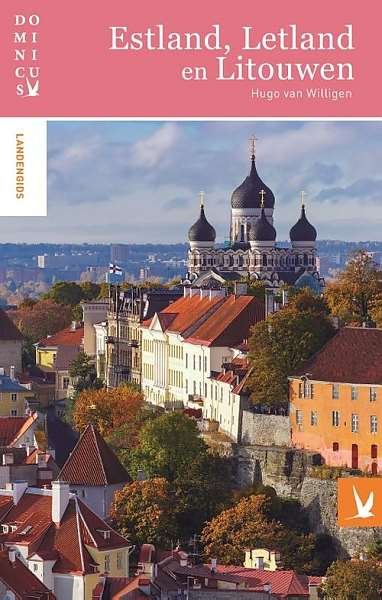
Dominicus travel guide Baltic States
€ 24,95,- per person
Half board 12 x 3 course dinner with coffee/tea in hotel
€ 465,- per person
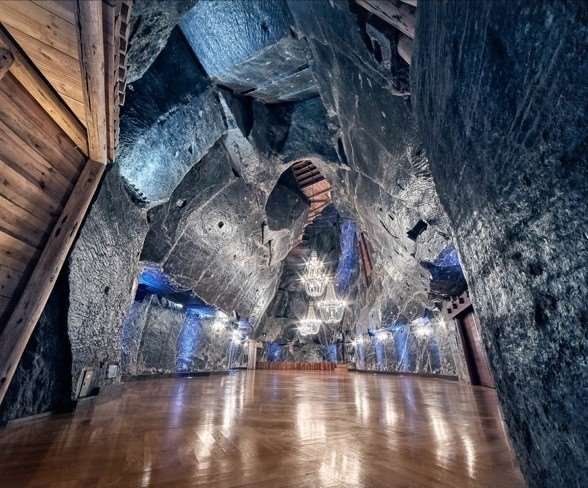
Krakow: Wieliczka Salt Mines Excursion
Afternoon visit to the world famous Wieliczka Salt Mine near Krakow. In the salt mines we find salt lakes and underground chambers such as St. Kinga's Chapel and the heritage of salt mining. UNESCO World Heritage since 1978. Duration: approx. 4 hours
€ 80,- per person
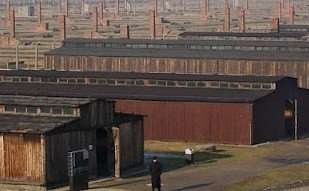
Excursion to Auschwitz-Birkenau Memorial Museum, including educational tour - duration 5 hours.
€ 80,- per person
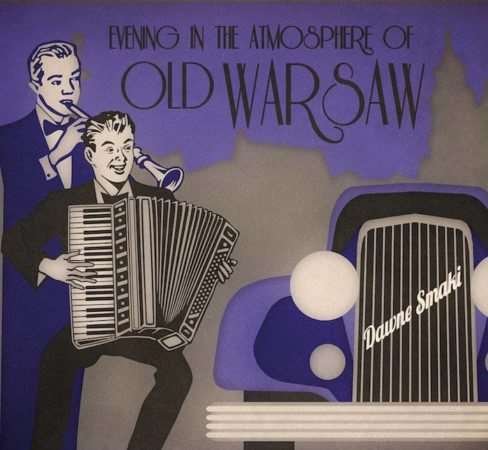
Warsaw: Polish dinner at Restaurant Gospoda Kwiaty Polskie
€ 45,- per person
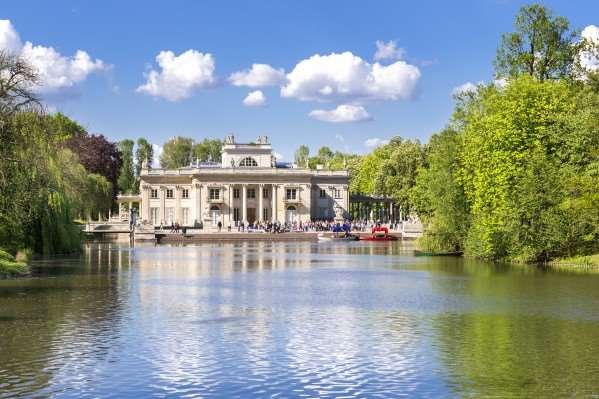
Warsaw - Excursion Royal Lazienki Park incl. palace visit
Duration: approximately 3 hours
€ 45,- per person
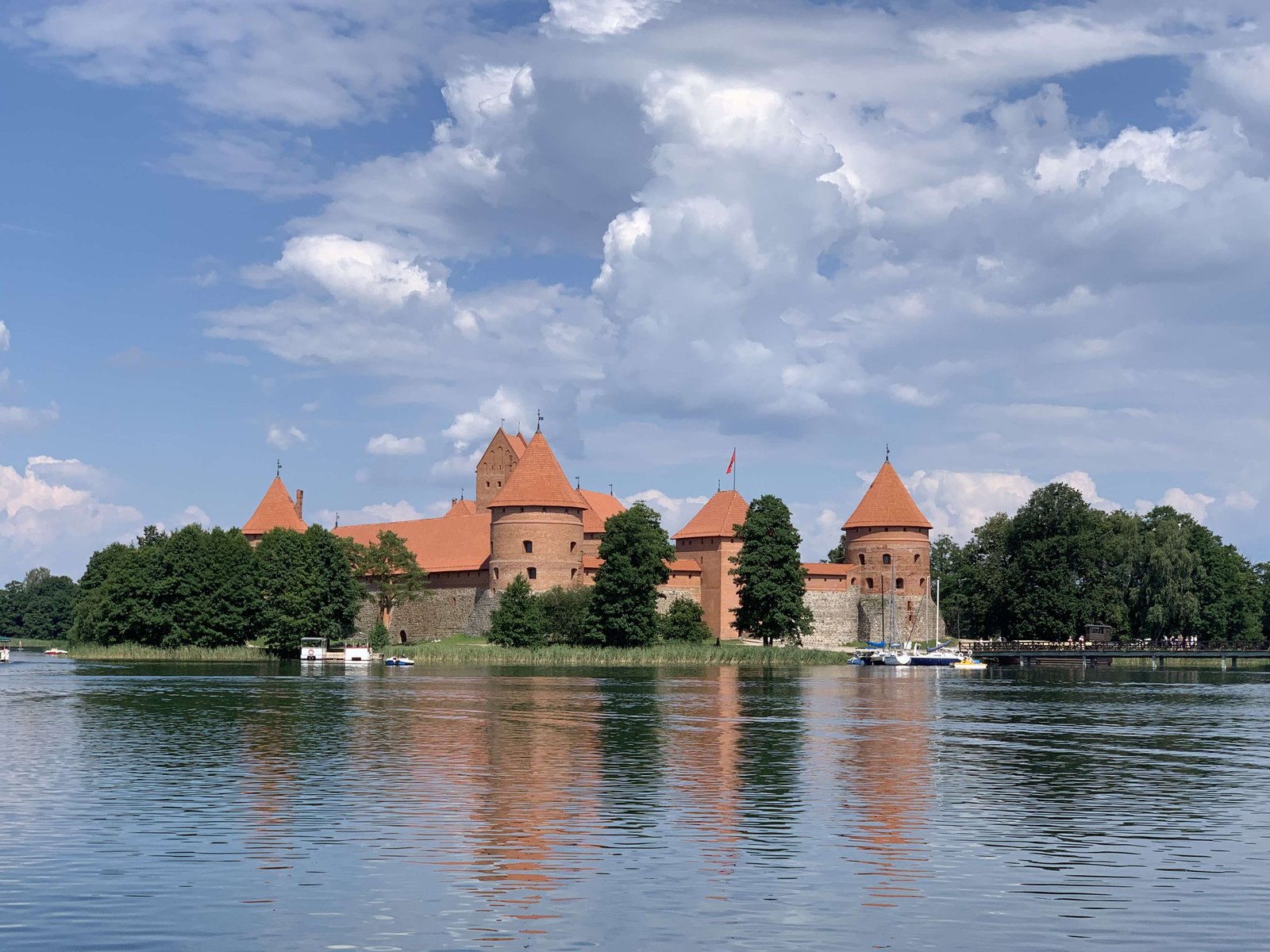
Vilnius - Excursion to Trakai incl. visit Trakai castle
Visit to the idyllically situated medieval castle of Trakai, located on one of the many islands in Lake Galve. Duration of excursion: approximately 3 hours
€ 50,- per person
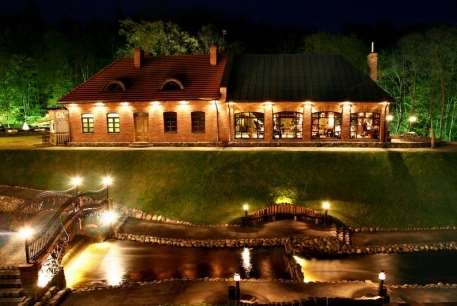
Vilnius: Folklore Dinner in Restaurant
€ 50,- per person
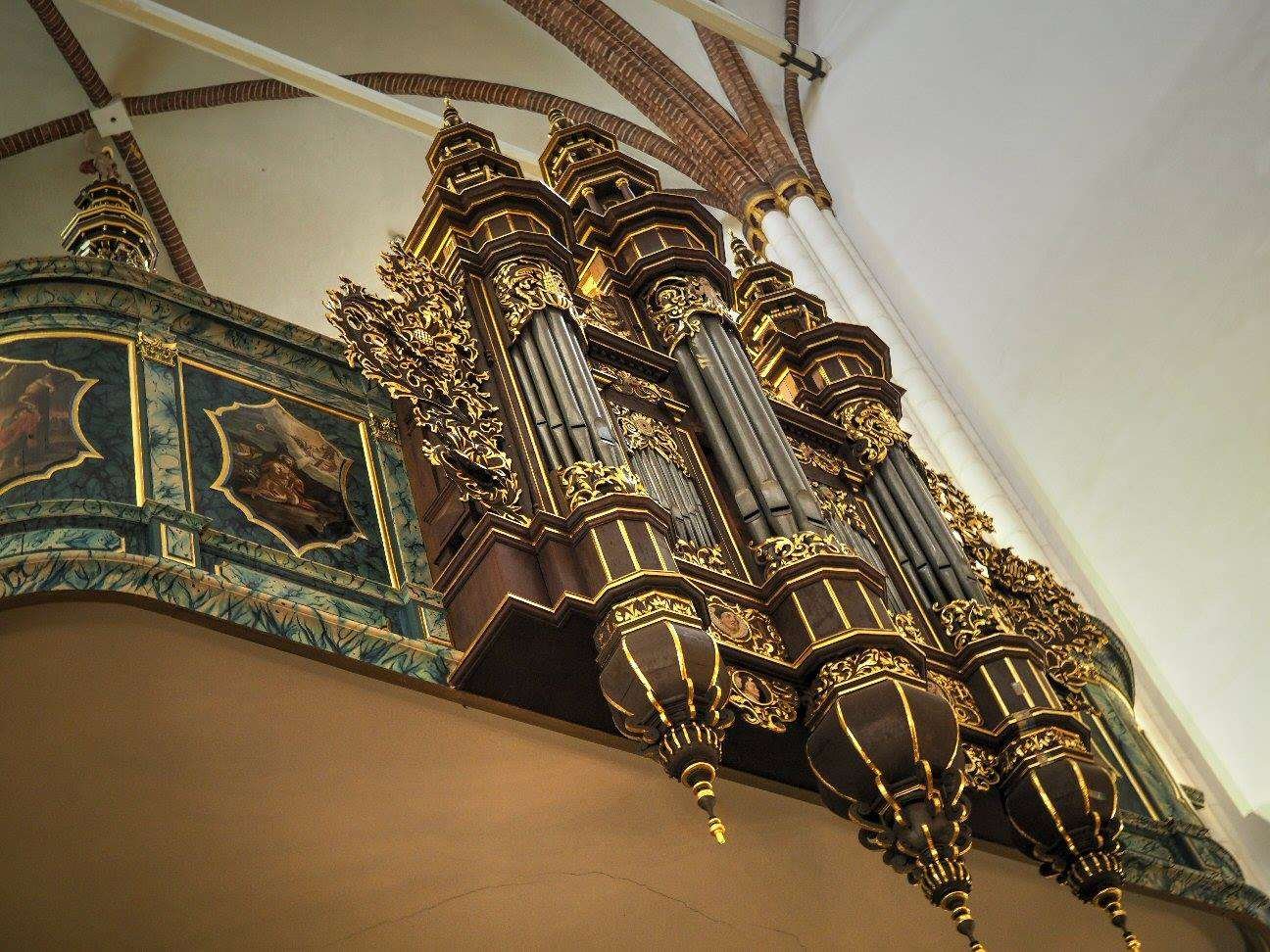
Riga: Organ Concert in Riga Cathedral
€ 40,- per person
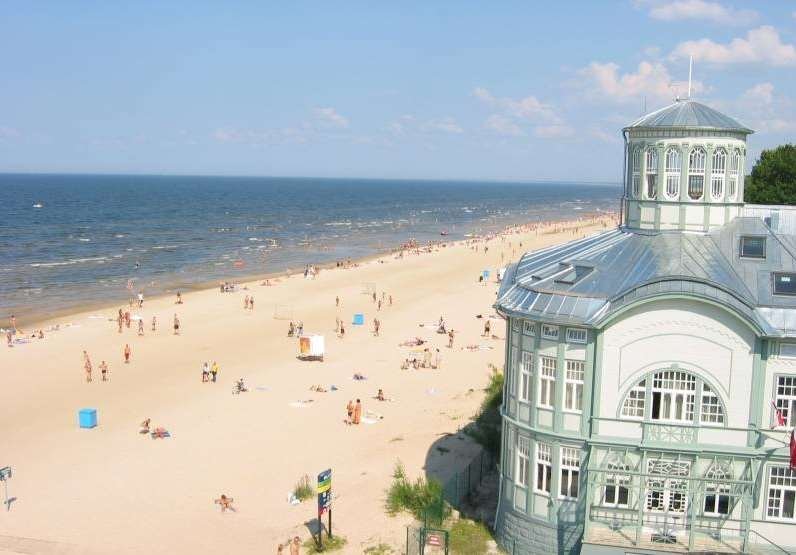
Riga - Excursion to Jurmala - approx. 4 hours
Visit the lively Latvian resort of Jurmala, famous for its wooden architecture and sandy beaches. Duration of excursion: 4 hours
€ 45,- per person
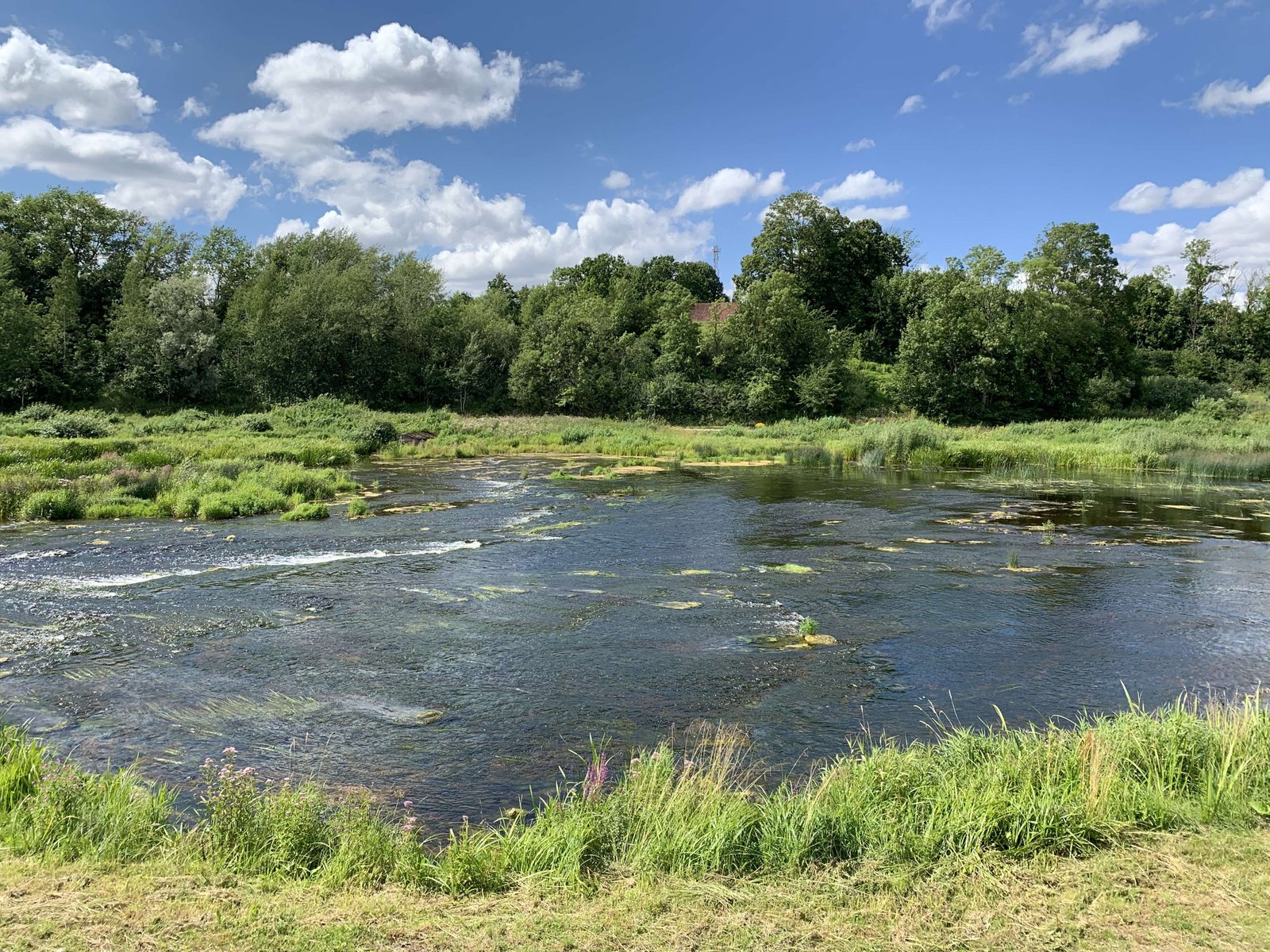
Riga: Excursion Gauja National Park
Morning excursion to the 'little Switzerland of Latvia', Gauja National Park with a visit to the ruins of the medieval Sigulda castle. Duration of excursion: approximately 4 hours
€ 60,- per person
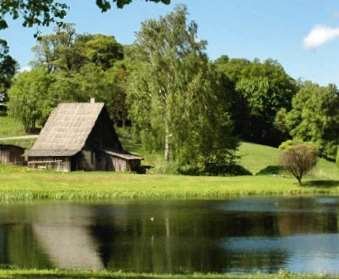
Riga: Ethnographic Open-Air Museum
€ 45,- per person
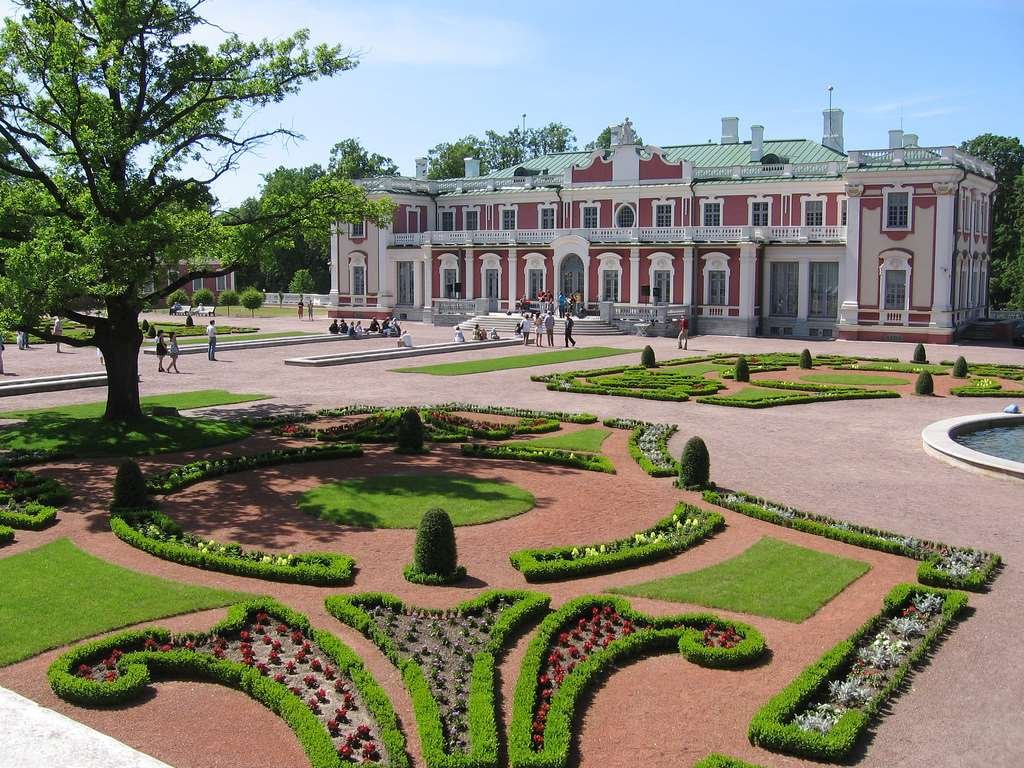
Tallinn - Excursion to Kadriorg Park including visit KUMU
Visit the award-winning Estonian Art Museum, with its collections of classical and contemporary visual arts. Duration of excursion: approximately 3 hours
€ 55,- per person
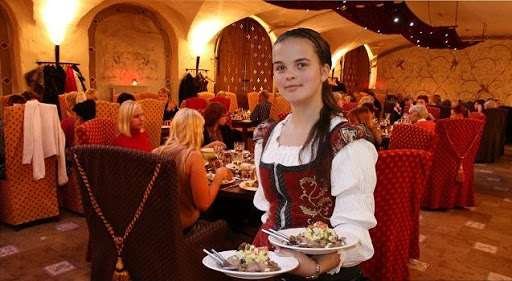
Tallinn: Medieval dinner at Restaurant Maikrahv
€ 60,- per person
Travel Insurance
Protect your trip with suitable travel and cancellation insurance.
Tour Highlights